
La Vía Verde de Dénia
An easy old railway route through citrus orchards, irrigation channels, farmhouses and open countryside beyond Dénia.
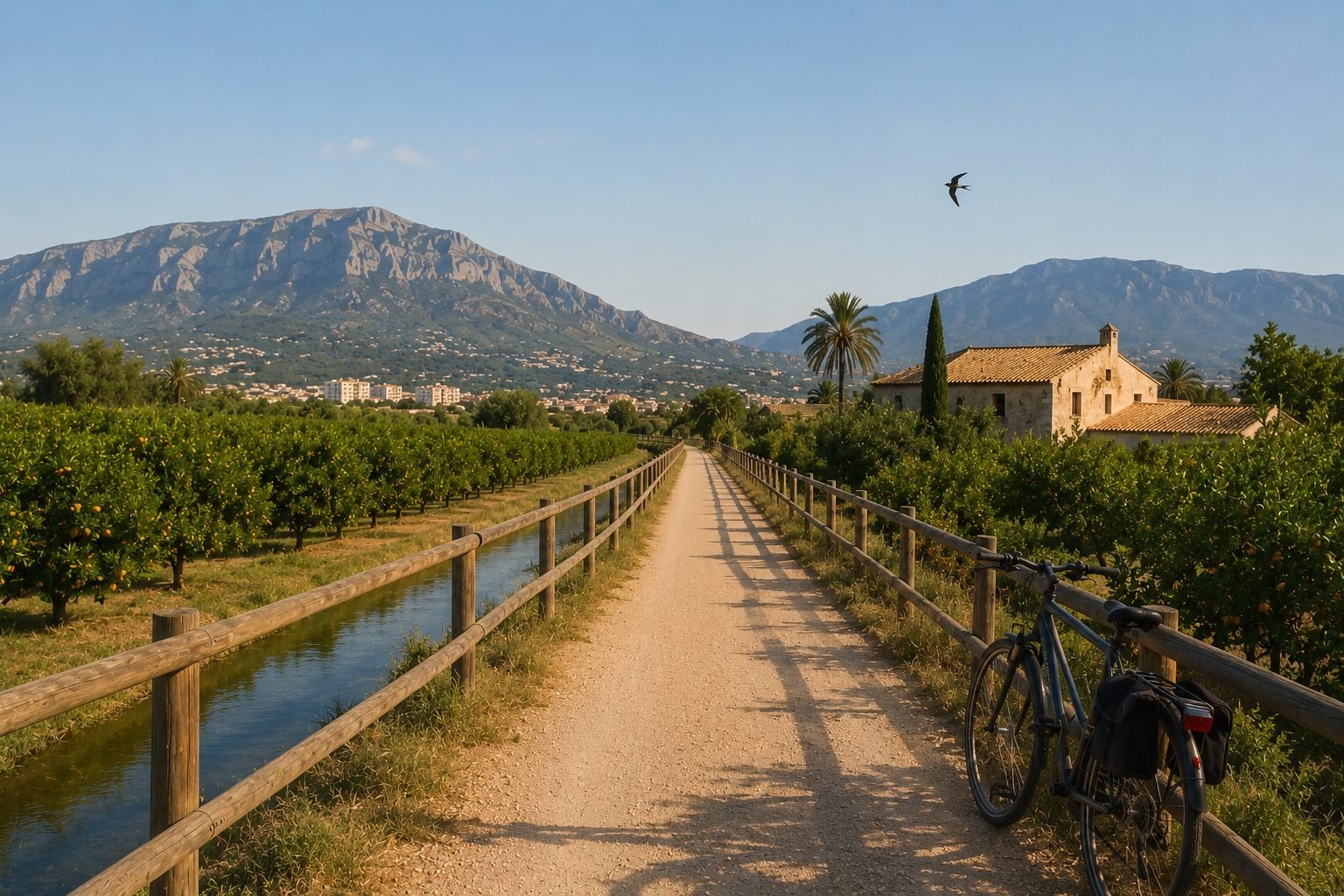
For visitors who want to experience Dénia’s countryside without climbing the Montgó or tackling a rocky coastal trail, the Vía Verde de Dénia offers one of the easiest and most relaxing ways to spend a few hours outdoors. This almost completely level greenway follows the track bed of the former Carcaixent–Dénia railway, carrying walkers and cyclists away from the edge of town and into a landscape of citrus orchards, irrigation channels, traditional farmhouses and distant mountains.
The official route runs for approximately 6.5 kilometres in one direction, beginning at Camí de la Bota on the outskirts of Dénia and continuing towards El Verger. With only around seven metres of total ascent, it feels remarkably flat. Most people can walk the route in about one hour and forty minutes each way, while a relaxed bicycle ride takes approximately 35 minutes. Remember that unless you arrange transport from the other end, the complete out-and-back journey is closer to 13 kilometres.
Unlike a mountain hike, the Vía Verde requires no specialist equipment. The path combines compacted earth with smooth paved sections and is broad enough for walkers, bicycles, pushchairs and wheelchairs. Dénia’s tourism authority describes the entire route as suitable for wheelchair users, and two reserved parking spaces are provided near the Dénia trailhead.
Leaving the Town Behind
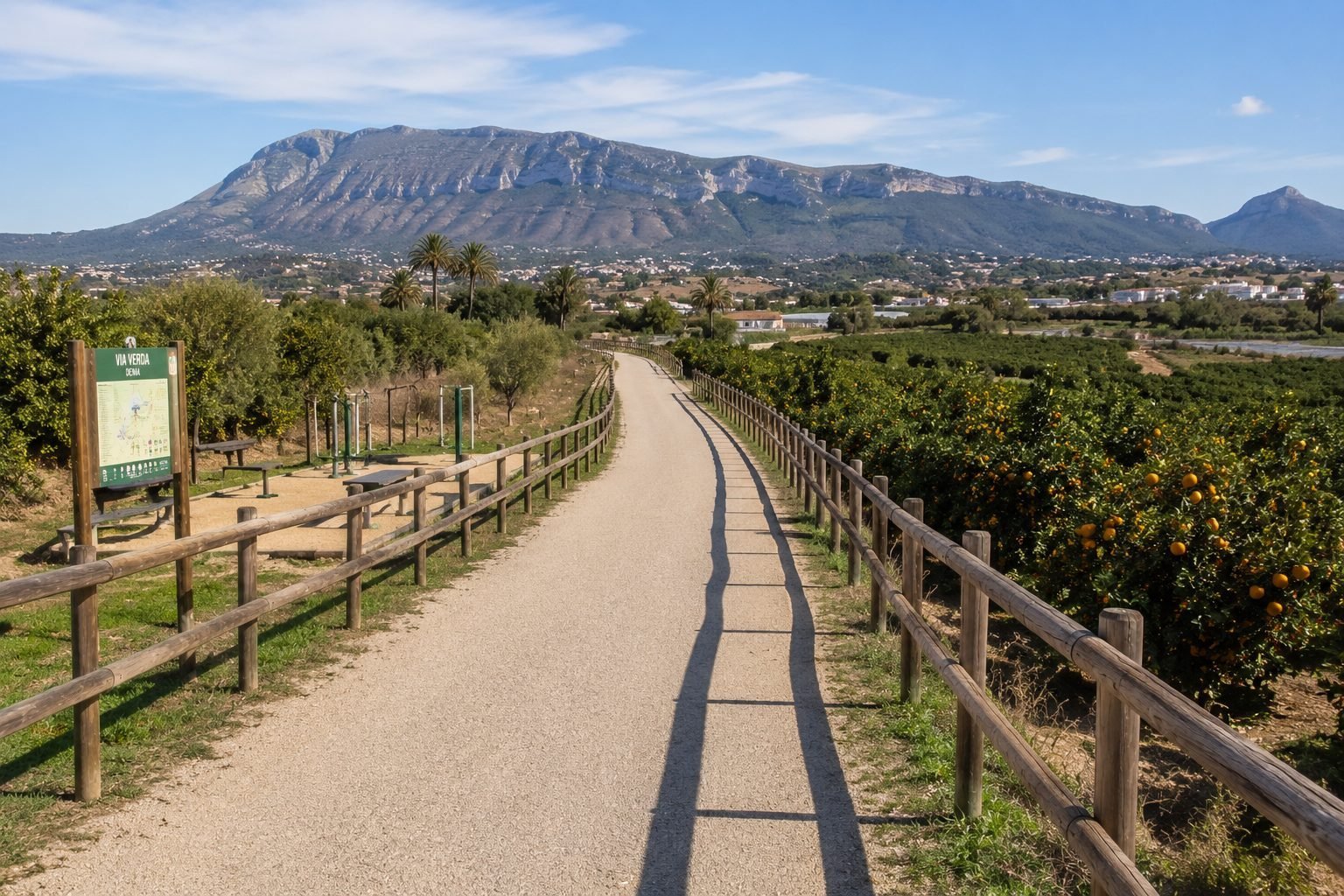
The route begins only a short distance from Dénia’s built-up area, but the transition into the countryside happens quickly. From Avenida de Alicante, the usual approach continues through Calle Ondara and Carrer Negrasa towards Camí de la Bota, close to the HCB hospital and a nearby garden centre. At the beginning of the greenway, a recreational area provides benches, picnic tables and outdoor exercise equipment.
Within the first few minutes, traffic noise begins to fade and the old railway line establishes its rhythm: straight stretches of path, low fences, cultivated fields and long views towards the mountains. The Montgó often remains visible behind you, while the lower but distinctive Serra de Segària gradually becomes more prominent ahead.
This is not dramatic wilderness. Its appeal is quieter and more intimate. The route passes through the agricultural plain that has supported communities around Dénia for generations. Orange and mandarin trees form orderly green walls beside the path, interrupted by almond trees, carob trees, vegetable plots and occasional rows of palms leading towards private homes.
The experience changes with the agricultural calendar. When citrus trees are flowering, the air can carry the sweet scent of orange blossom. Later in the year, bright fruit appears beneath the dark leaves. After rain, the earth deepens in colour and the irrigation channels fill, while on dry summer days the landscape becomes sharper and more golden beneath the sun.
The orchards are working agricultural properties rather than public gardens. Fruit should not be picked, even when branches hang temptingly close to the path. Staying on the greenway also avoids damaging irrigation systems, crops and private land.
A Route for Almost Everyone
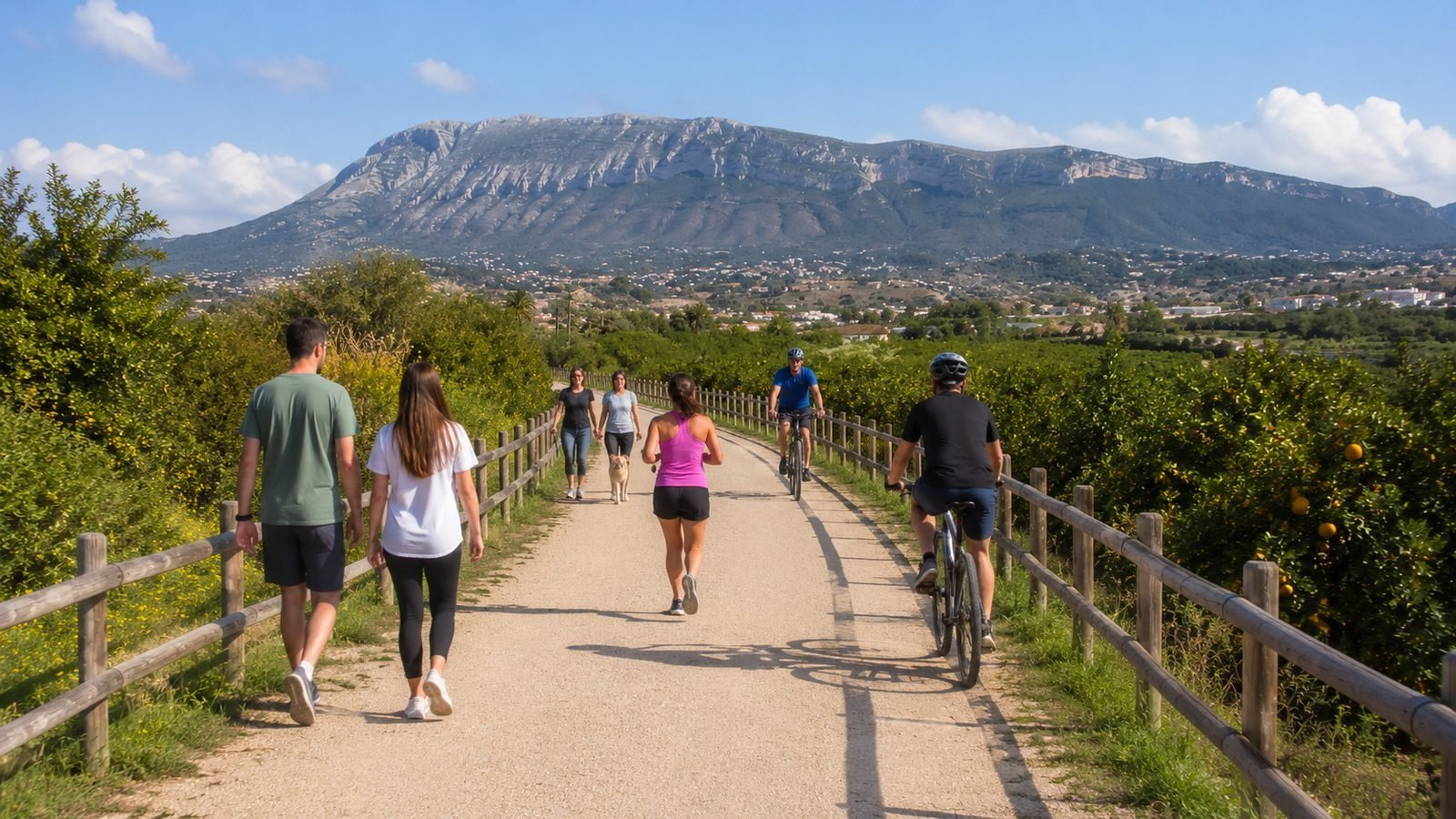
The Vía Verde is one of Dénia’s most inclusive outdoor routes. Its width, gentle profile and largely even surface make it suitable for families with young children, older walkers and visitors who would not feel comfortable on the uneven trails of the Montgó.
Parents can walk with a pushchair without negotiating steep steps, while children learning to cycle can practise away from ordinary road traffic. Wheelchair users can complete the route, although assistance may still be helpful depending on the chair, surface conditions and the length attempted. The path is traffic-free for most of its course, but several rural roads cross it, so cyclists and families should slow down and check carefully before continuing.
The route is also popular with runners, local cyclists and people walking dogs. Pedestrians have priority, and faster cyclists should reduce speed when passing, use a bell or friendly warning and leave plenty of room. Dogs should be kept on a lead, both for the comfort of other visitors and to prevent them from entering farmland or disturbing animals.
Because the railway followed such a direct course, it is almost impossible to become lost. The greenway continues straight through the agricultural landscape, with information panels and characteristic route markers confirming that you remain on the old line.
Bridges, Watercourses and Irrigation
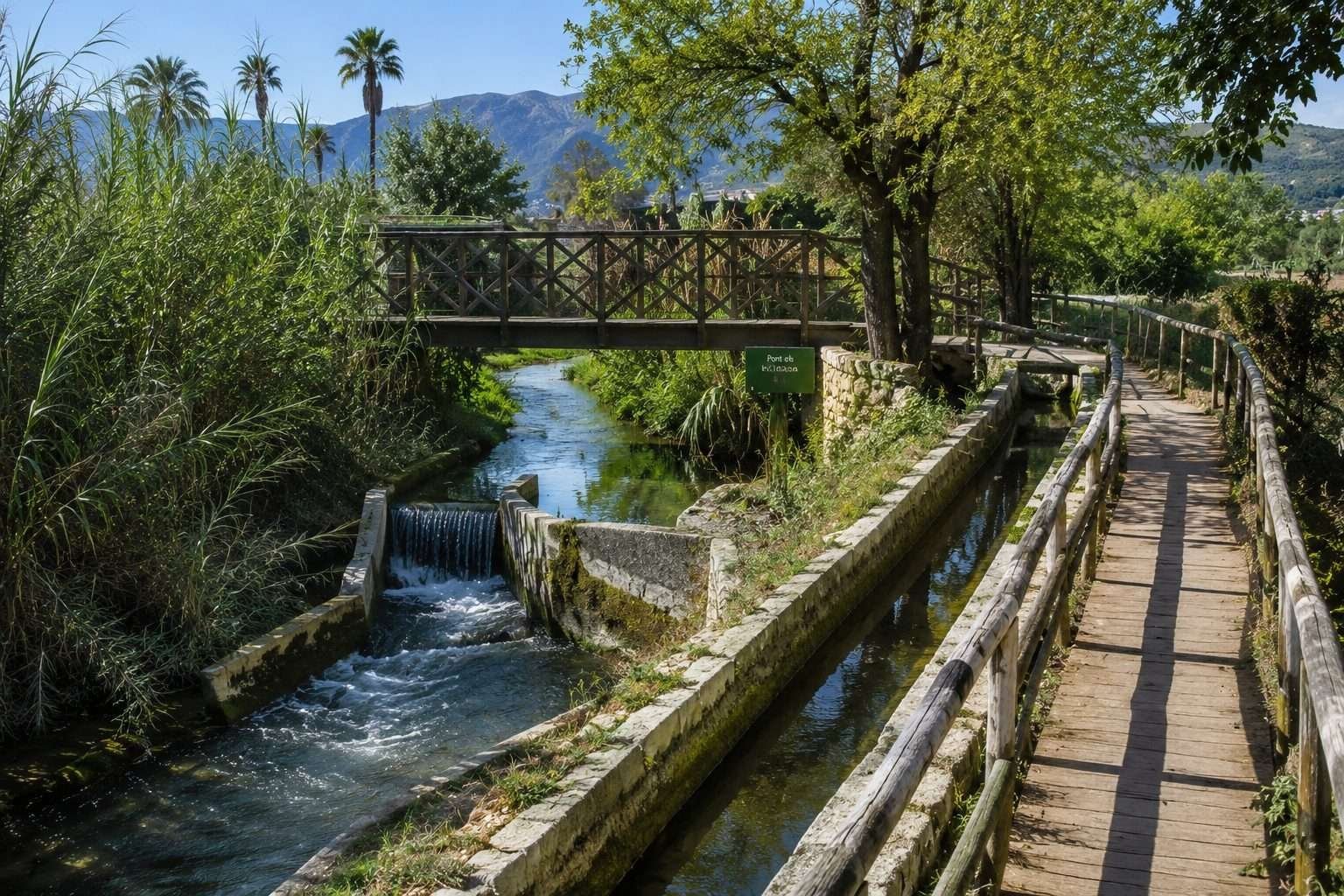
Although the path is flat, it crosses a surprisingly varied network of seasonal streams, ravines and irrigation channels. Wooden walkways and small bridges carry visitors over channels that may appear completely dry during one season and contain flowing water after heavy rain.
One of the most substantial structures is an approximately 18-metre footbridge over the Alberca River. Other crossings span the Barranc de l’Alter and smaller temporary watercourses. These modest pieces of infrastructure reveal how carefully water has always been managed across the low-lying agricultural plain.
Traditional channels distribute water between orchards, while old reservoirs and irrigation ponds can still be seen beside the route. Some remain part of the agricultural system; others have fallen out of use and are slowly being reclaimed by reeds and other vegetation.
These watercourses also create small wildlife corridors through the cultivated land. Olms, brambles, reeds and climbing plants gather beside the damper areas, giving birds, insects and small animals shelter between the orchards. The scenery may look carefully organised, but nature finds space along the margins.
After prolonged rain, parts of the surrounding land can become wet or muddy even when the principal route remains passable. The bridges and raised walkways are therefore more than decorative features: they allow the greenway to continue across terrain shaped by seasonal water.
Reminders of the Railway
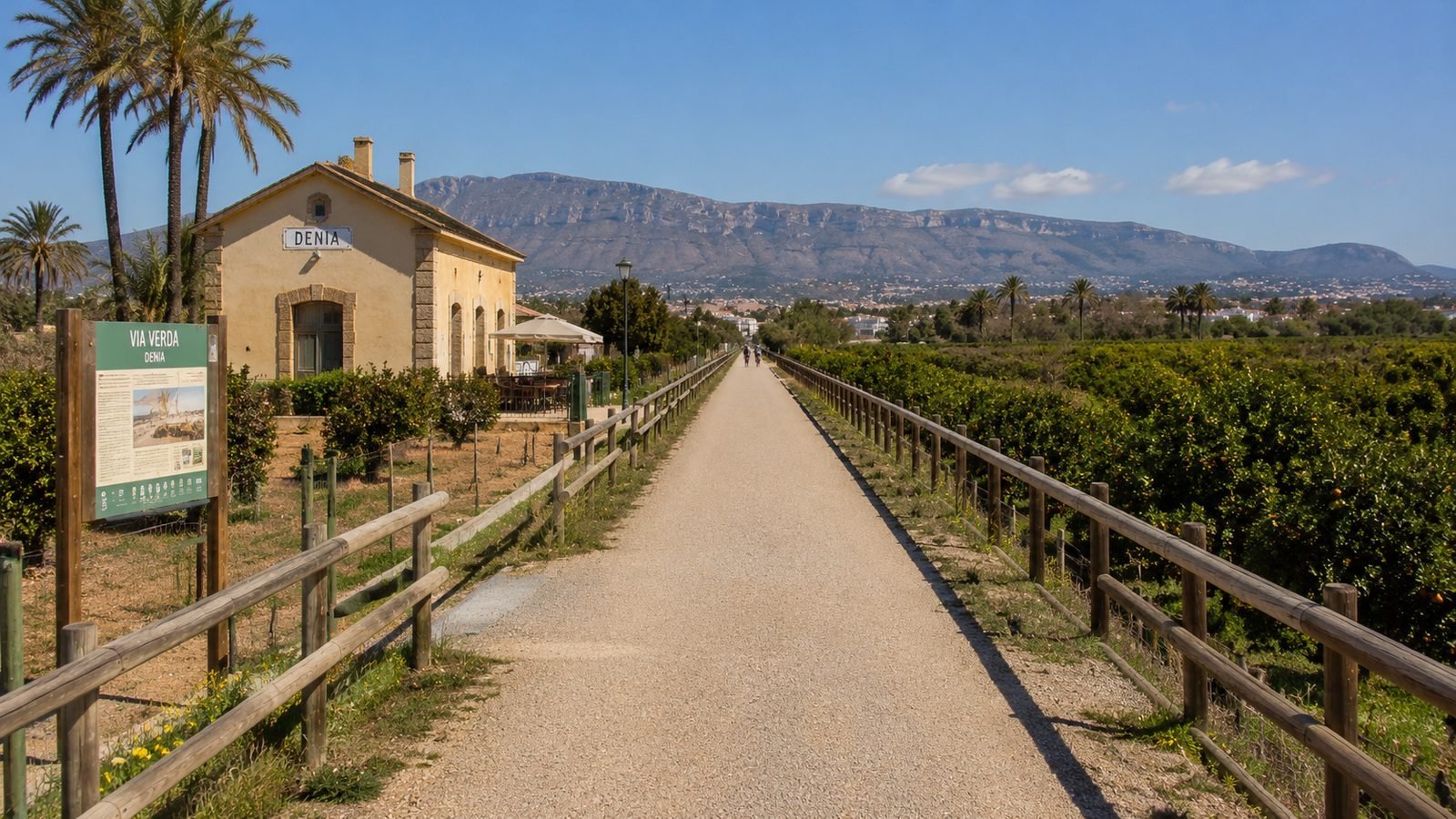
The straightness of the path is the clearest reminder that this was once a railway. Ordinary country lanes curve around fields and property boundaries; the Vía Verde cuts confidently through the landscape along the alignment engineered for trains.
Old railway elements remain visible at intervals. Visitors pass former infrastructure, historic markers and information panels describing the route’s past. One abandoned station building has been repurposed by the Aldea Felina association as a refuge for cats, giving an unexpected new life to a structure from the railway era.
Elsewhere, bridges, embankments and cuttings reveal the practical engineering needed to carry the line across streams and through the agricultural plain. These structures are not monumental, but together they help visitors imagine the sound and movement that once filled what is now such a quiet corridor.
For older residents, the railway remains part of living memory. Generations used it to travel between the inland towns, agricultural communities and the coast before the line closed in 1974.
From Horse-Drawn Tramway to Steam Railway
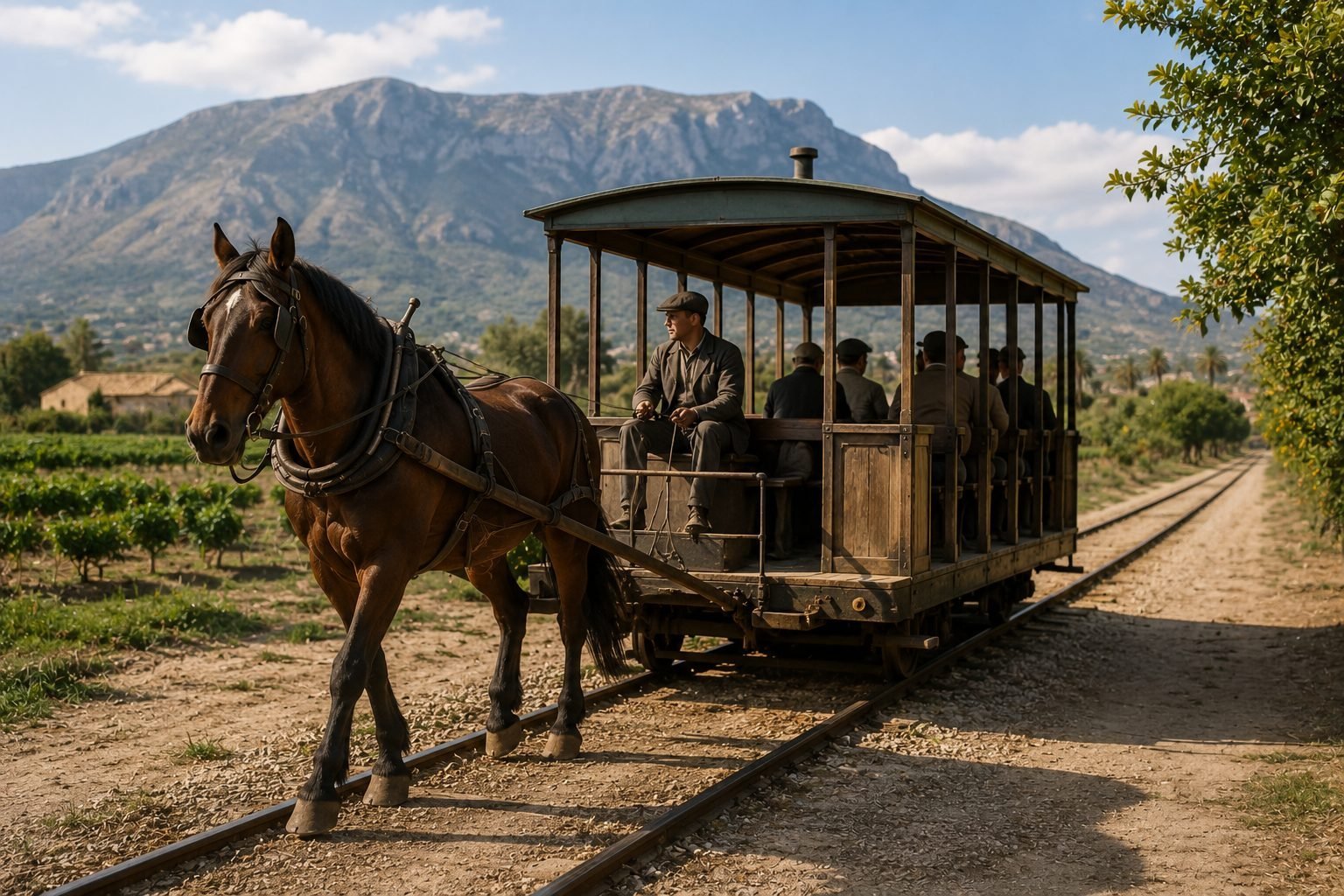
The history of the route reaches back to the earliest years of narrow-gauge rail transport on the Iberian Peninsula. The first section between Carcaixent and Gandia opened in 1864 and initially operated more like a horse-drawn tramway than the railway later generations would recognise. Horses were changed at strategically placed stables along the line.
Twenty years later, the railway was modernised and extended south from Gandia to Dénia. The new section reached Dénia in 1884 and operated with steam traction, linking the town more closely to the agricultural and commercial centres farther north.
The railway became important to both passengers and the regional economy. It connected coastal communities with farming areas whose citrus fruit and other produce were destined for wider markets. At a time when journeys by road were slow and uncomfortable, the train also transformed personal travel, allowing residents to move more easily between towns and reach the coast.
Dénia’s port strengthened the line’s economic value. Agricultural goods arriving by train could continue their journey by sea, while travellers and supplies moved between the harbour and the interior. The railway therefore belonged to the same commercial landscape as the orange groves, warehouses and port activity that helped shape modern Dénia.
The Gandia–Dénia section finally closed in 1974. Although trains disappeared, the continuous railway corridor remained, making it possible decades later to recover the route as a non-motorised path. Spain’s Greenways and Natural Trails programmes have converted many disused railway lines into routes for walking and cycling, preserving both the corridor and part of its historical identity.
Farmhouses and the Rural Landscape
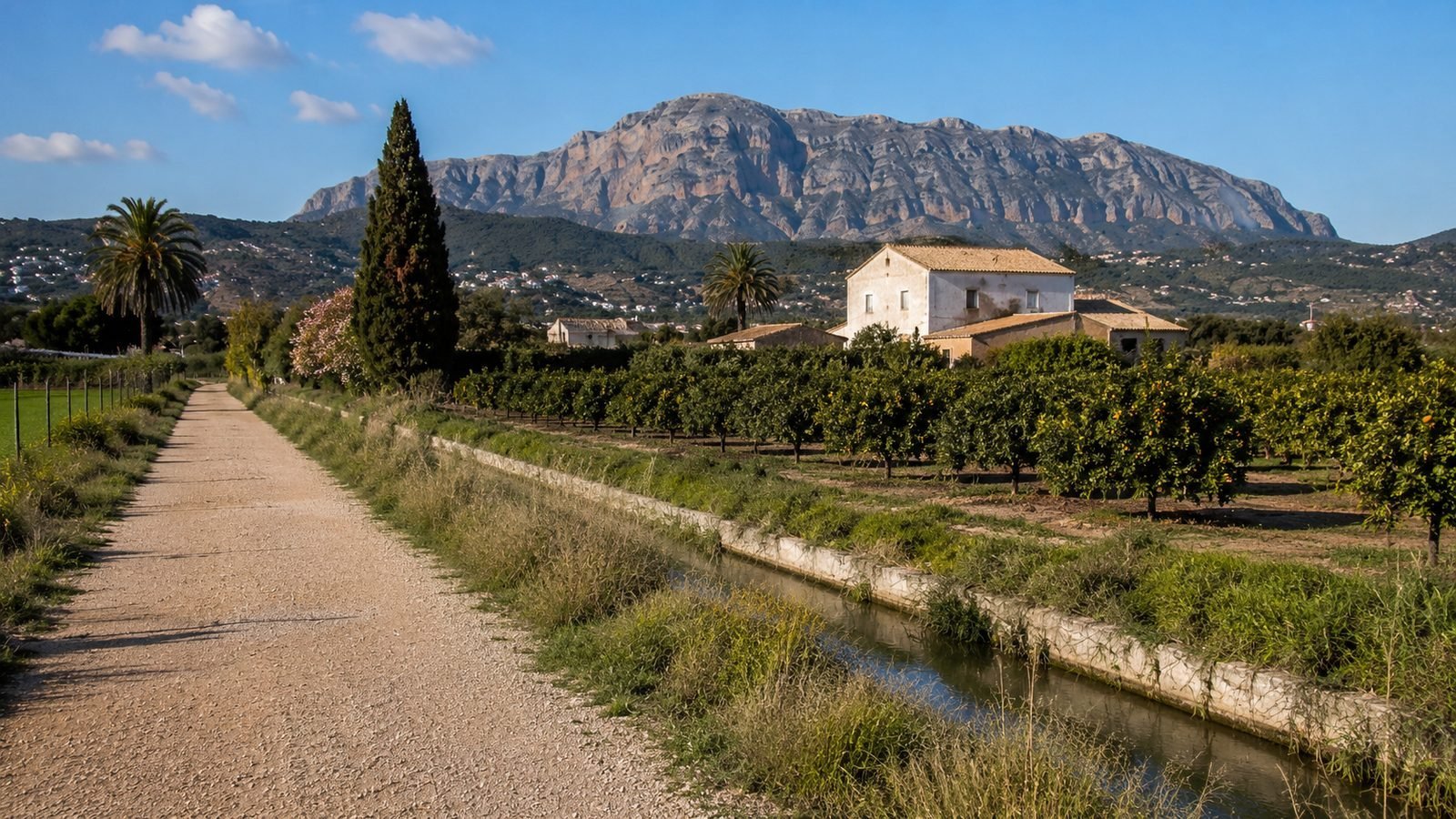
One of the pleasures of the Vía Verde is seeing the kinds of places that are easy to miss when travelling by car. Traditional farmhouses stand beyond the orchards, often marked by tall palms, old walls or an unusually large araucaria tree. Whitewashed buildings, tiled roofs and weathered outbuildings recall a time when families lived much more closely with the land they cultivated.
An old brick chimney survives beside one property, while elsewhere stone walls, wells and disused irrigation ponds suggest earlier patterns of rural life. The official route description points out several of these details, encouraging visitors to look beyond the path itself.
Some farmhouses remain carefully maintained, surrounded by productive fields and gardens. Others show the effects of abandonment, with vegetation growing through fences and trees overtaking former agricultural plots. This mixture gives the route a sense of continuity and change: farming remains active, but the countryside is constantly adapting.
The greenway does not present rural Dénia as a museum. Tractors may be working nearby, irrigation pumps may be running and local residents still use the narrow lanes that cross the old railway. The route passes through a living landscape rather than a reconstructed version of the past.
The Changing Seasons
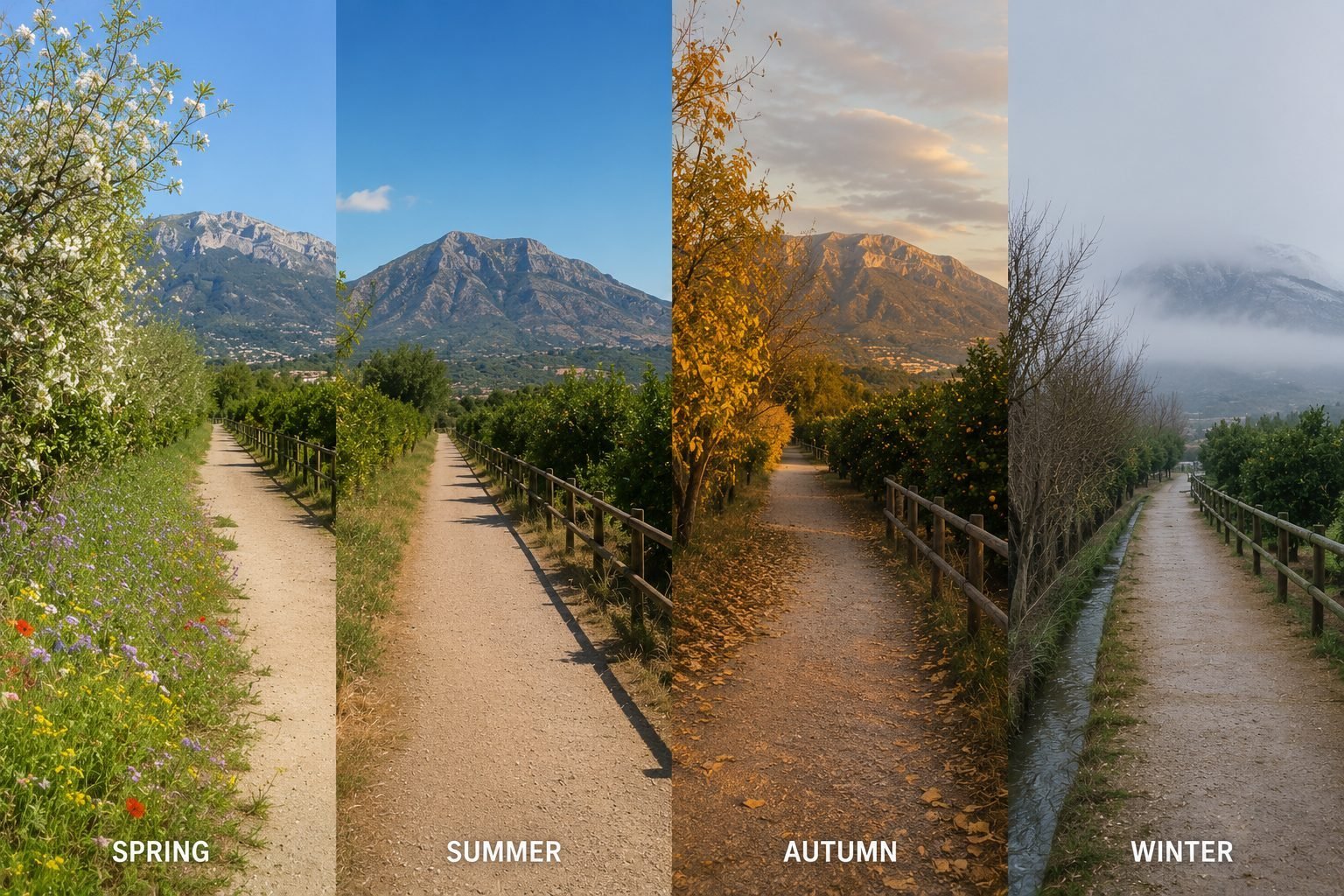
Each season gives the Vía Verde a different atmosphere.
Spring is usually the most colourful time. Wildflowers appear beside the path, insects gather around flowering plants and the citrus orchards may fill the air with orange blossom. Temperatures are generally comfortable for walking or cycling, although occasional rain can soften unpaved sections.
Summer brings intense light and heat. Because large parts of the route have little shade, an early-morning or evening start is much more comfortable than walking at midday. The orchards remain green, but the surrounding uncultivated land becomes dry and golden.
Autumn offers softer temperatures and a gradual return of moisture to the landscape. Citrus fruit begins to become more noticeable among the trees, while the lower angle of the sun gives the farmhouses and distant mountains warmer colours.
Winter can be one of the best times for a longer walk. On clear days, the air is cool and visibility across the plain is excellent. On misty mornings, the orchards and irrigation channels take on a quieter, almost suspended appearance, with the Montgó occasionally disappearing behind low cloud.
Birds and Small Wildlife
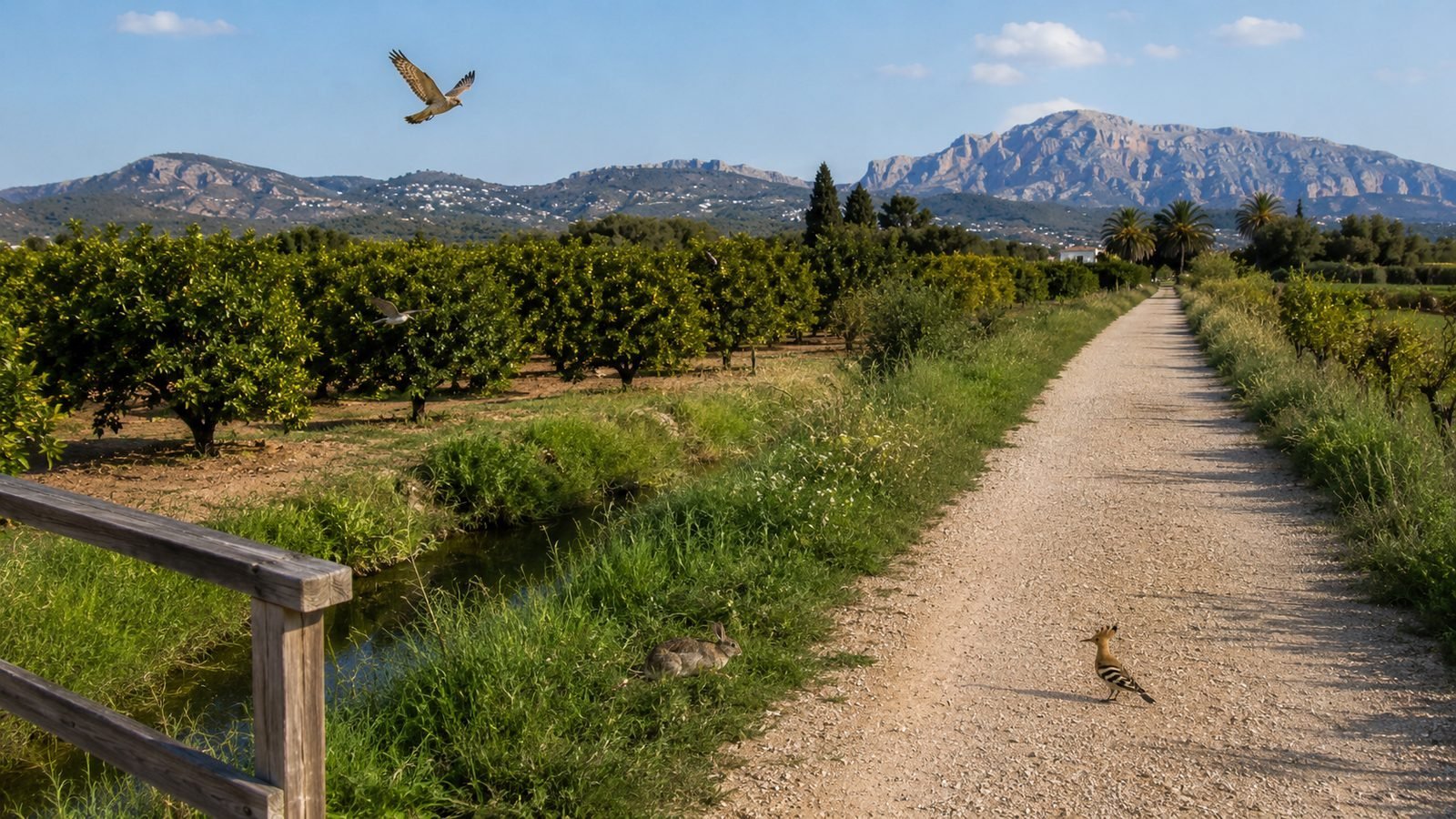
The open agricultural landscape attracts a variety of birds. Swallows and swifts may pass overhead during the warmer months, while kestrels sometimes hover over fields searching for prey. Hoopoes, recognisable by their black-and-white wings and distinctive crest, can occasionally be seen feeding on open ground.
Smaller birds move between hedges, palms and orchard trees, while watercourses provide habitat for species that depend on damper vegetation. Rabbits and other small mammals may cross the path during quieter periods, particularly early or late in the day.
Wildlife encounters are usually brief. The Vía Verde is used regularly by people and passes through cultivated land, so it does not feel like an isolated nature reserve. Its value lies instead in the coexistence of agriculture, human activity and the small pockets of habitat that survive between them.
Visitors can help by avoiding loud music, keeping dogs controlled and leaving plants, nests and animals undisturbed.
Rest Areas and an Unhurried Pace
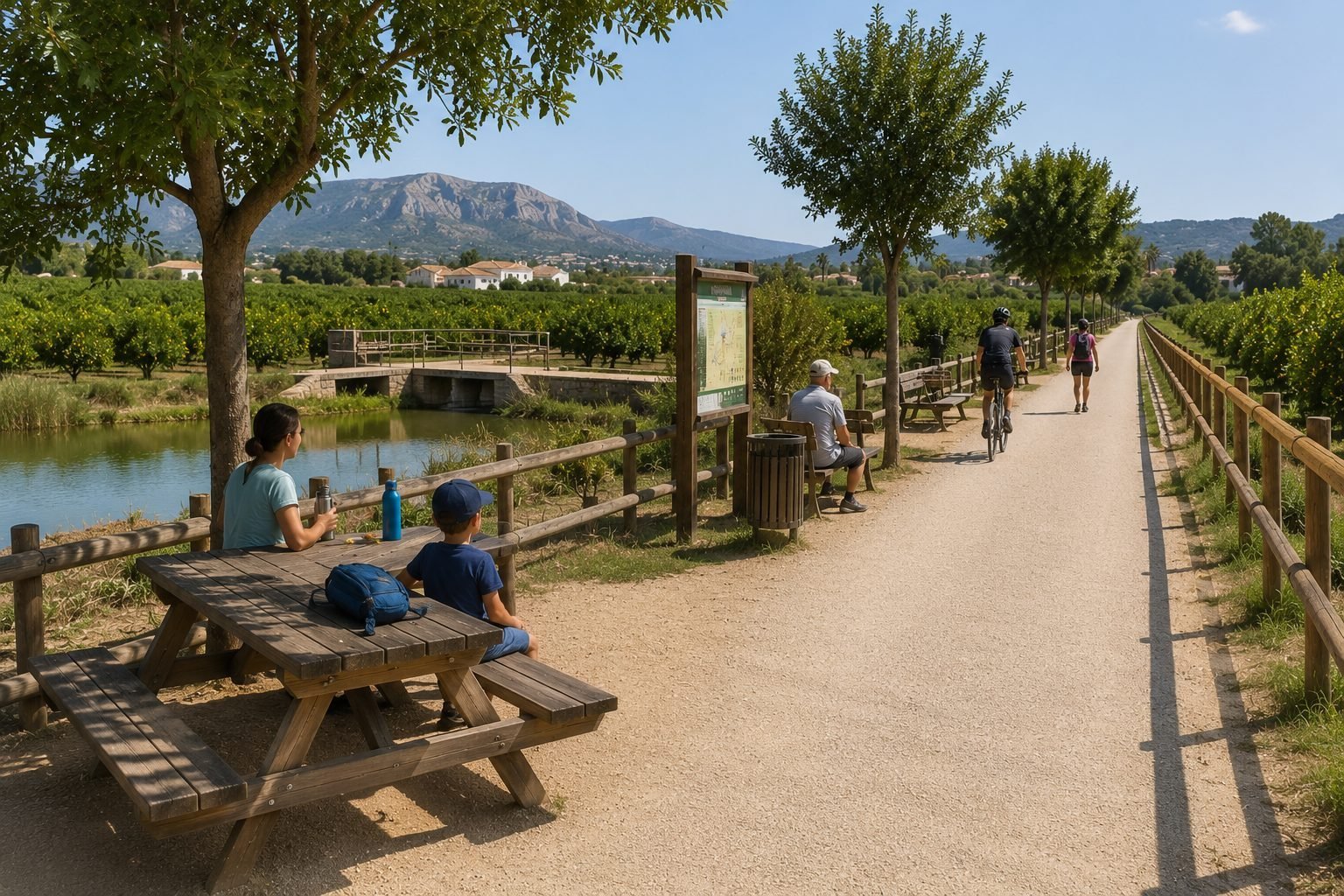
Several rest areas are distributed along the route, with benches and picnic tables where walkers can pause. These are welcome in warm weather, although shade is not guaranteed at every stopping place.
The Vía Verde is best enjoyed without rushing. A cyclist focused only on reaching the end may complete it quickly but miss the old irrigation pond, the line of palms leading towards a farmhouse or the changing view of the Segària ridge.
For families, the rest areas make it easy to turn the route into a simple picnic outing. There is no obligation to complete the full distance. Walking or cycling for 30 minutes, stopping for a snack and returning by the same path can be enough to experience the countryside.
Food and drinking water should be brought from Dénia, particularly outside the main season. The route passes close to residential and agricultural areas, but cafés, fountains and shops are not continuously available beside the trail.
Reaching El Verger and Continuing Beyond
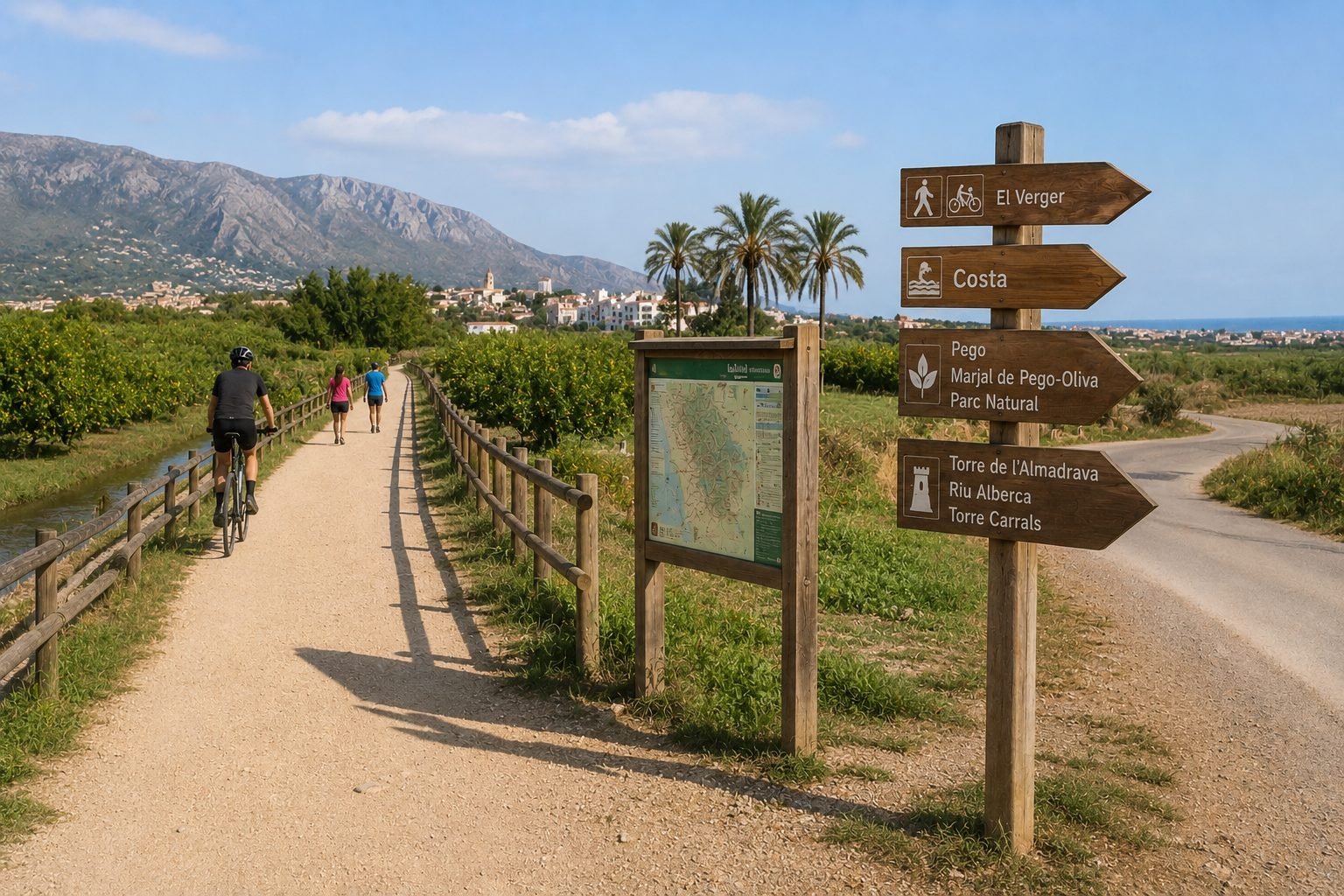
The official greenway finishes near El Verger, with Els Poblets also close to the route. From the final section, the landscape begins to connect with a wider network of rural roads and cycling routes. Visitors can continue towards El Verger’s centre, branch towards the coast or link with routes heading in the direction of Pego and the Marjal de Pego–Oliva Natural Park.
The official trail does not end directly on the beach, so anyone planning to continue towards the sea should consult a map and choose the connecting rural roads carefully. Some intersections carry local traffic even though the Vía Verde itself is largely vehicle-free.
Stronger cyclists can use the greenway as the beginning of a longer exploration of Dénia’s northern countryside. Variants lead towards the Torre de l’Almadrava, the Alberca River, Torre Carrals and other parts of the agricultural plain.
For most visitors, however, the route needs no ambitious extension. Its greatest pleasure is simply following the old railway line until the town feels far away, resting beneath the trees and then returning with the Montgó gradually growing larger ahead.
Practical Advice
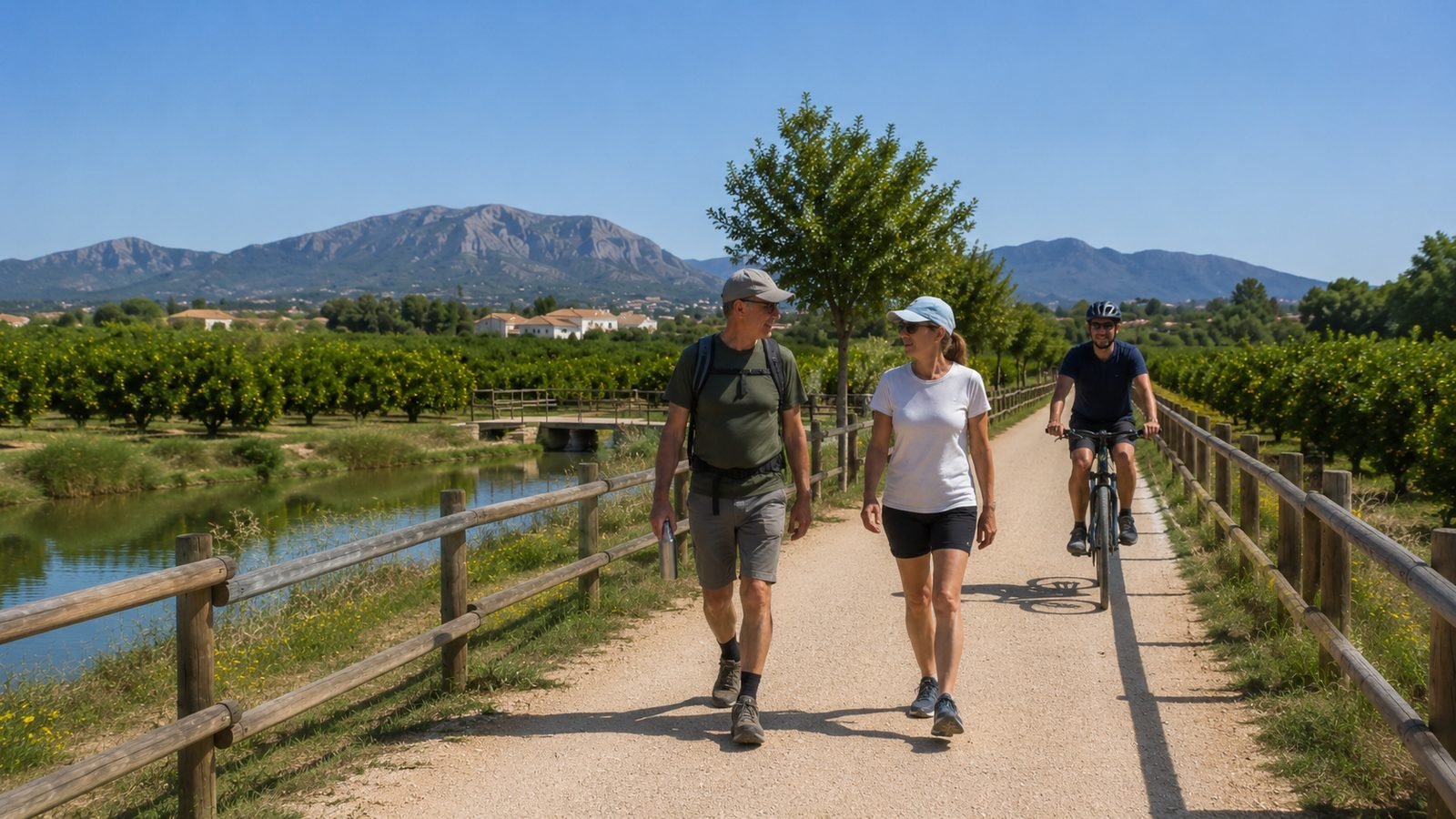
The Vía Verde is easy, but a few preparations make it more enjoyable. Wear comfortable walking shoes, carry water and use sun protection, as the route is exposed for long sections. Cyclists should bring a basic repair kit and ensure that tyres are suitable for both compacted earth and paved surfaces.
Take particular care where rural roads cross the greenway. The former railway alignment may give the impression that users always have priority, but agricultural and local vehicles can appear unexpectedly. Children should stop and check each crossing rather than cycling straight through.
Walkers and cyclists share the same space. Keep to a predictable side of the path, avoid blocking the entire width when travelling in groups and give other users warning before passing.
The national Natural Trails website currently warns that comprehensive rehabilitation work may cause temporary closures along the route. Visitors should check the latest official information and follow all construction signs before setting out.
Dénia Beyond the Beach
The Vía Verde reveals a side of Dénia that visitors focused entirely on the coast can easily overlook. Only a short distance from the marina, restaurants and beaches lies a quieter territory shaped by citrus farming, water management and the memory of the railway.
There are no dramatic cliffs or summit views here. Instead, the route offers straight horizons, old farmhouses, birds above the fields and the recurring silhouettes of the Montgó and Segària. Its pleasures are modest but genuine: the scent of orange blossom, the sound of bicycle tyres on the old track bed and the feeling of travelling through the countryside without needing to watch for traffic at every moment.
More than a century ago, this corridor carried steam trains, passengers and agricultural goods towards Dénia. Today, it invites people to move at a slower pace. The destination matters less than the journey through the orchards—and the glimpse it provides of the rural landscape that has always existed just beyond the city.