
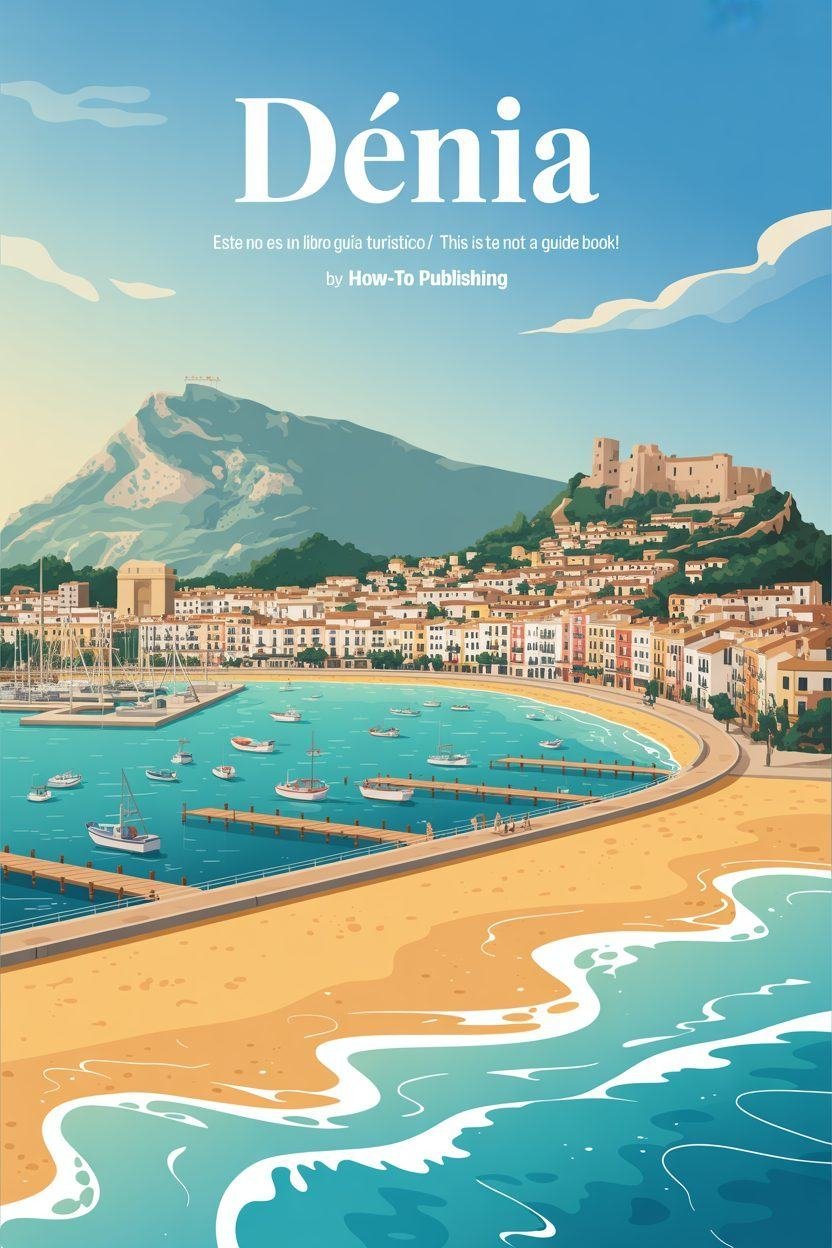
Les Rotes: Stroll from Cove to Cove
Rock shelves, clear water, quiet coves and the coastal path where Dénia gradually gives way to the Montgó and the sea.
Les Rotes begins where the city gradually loosens its grip and the Mediterranean landscape takes over. South of Dénia’s marina and the sandy beach of Marineta Cassiana, the coastline changes noticeably. Soft sand gives way to flat shelves of rock, low cliffs, hidden coves and clear, shallow pools. The atmosphere becomes quieter and more natural, with the sea on one side and the lower slopes of the Montgó rising on the other.
This is not the part of Dénia to choose for building sandcastles or spreading out on a broad beach. Instead, Les Rotes appeals to people who enjoy discovering the coast rather than simply sitting beside it. Visitors arrive carrying snorkels, water shoes, folding chairs and small bags of food, looking for their own comfortable space among the rocks. Others come to walk, cycle, paddle or simply enjoy the feeling of being close to the sea.
The water here is often exceptionally clear, especially on calm mornings. From the rocks, it is possible to look directly into the shallows and see small fish moving between patches of seagrass and stone. Snorkelers can explore the underwater landscape, while children often spend hours examining tide pools and looking for tiny marine creatures. Sea urchins are also common, making water shoes advisable when entering from the rocks.
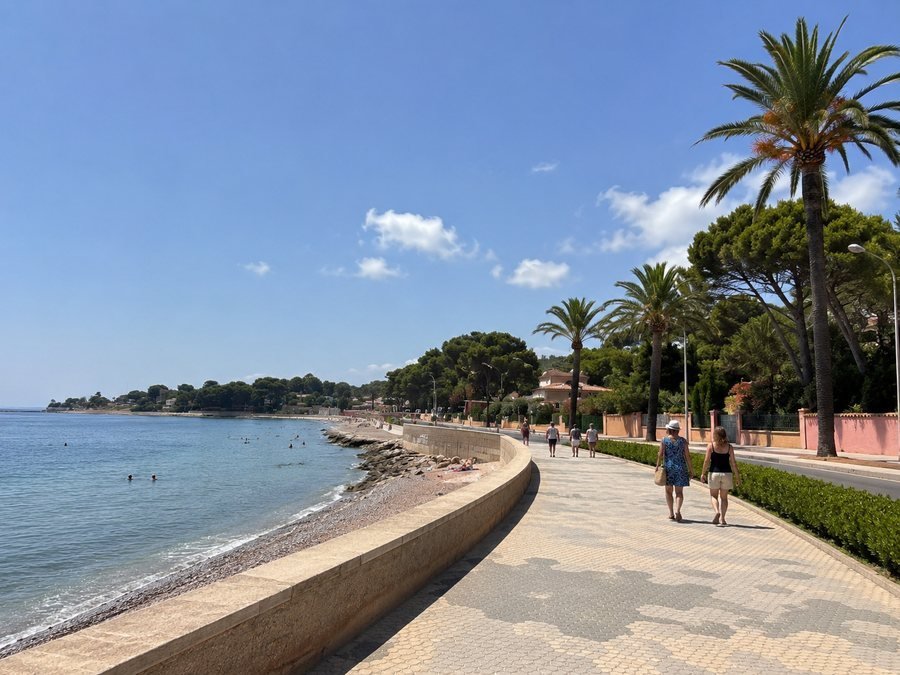
The Les Rotes Promenade
Running alongside much of the coast is a promenade that has become one of Dénia’s favourite places for walking. It does not feel like a formal urban seafront. Instead, it follows the natural shape of the shoreline, passing rocky coves, low stone walls, villas, restaurants and open views of the Mediterranean.
Cyclists, joggers, dog walkers and families share the route, particularly in the morning and early evening. Locals often use it as part of their daily routine, while visitors tend to walk slowly, stopping repeatedly to photograph the sea or watch swimmers entering the water below.
The soundtrack is simple: waves washing over the rocks, bicycle wheels passing along the path, seabirds overhead and conversations drifting from terraces and gardens. Even in summer, the promenade can retain a sense of calm, particularly outside the busiest hours.
Sunrise and sunset are especially rewarding times to walk here. In the morning, the first light spreads across the sea and gradually reaches the rocks and villas. The air is cooler, the water is often calmer and the coastline feels almost private. In the evening, the lowering sun illuminates the Montgó and softens the colours of the landscape. Many people complete the walk in one direction and then turn back, experiencing the same coastline from an entirely different angle.
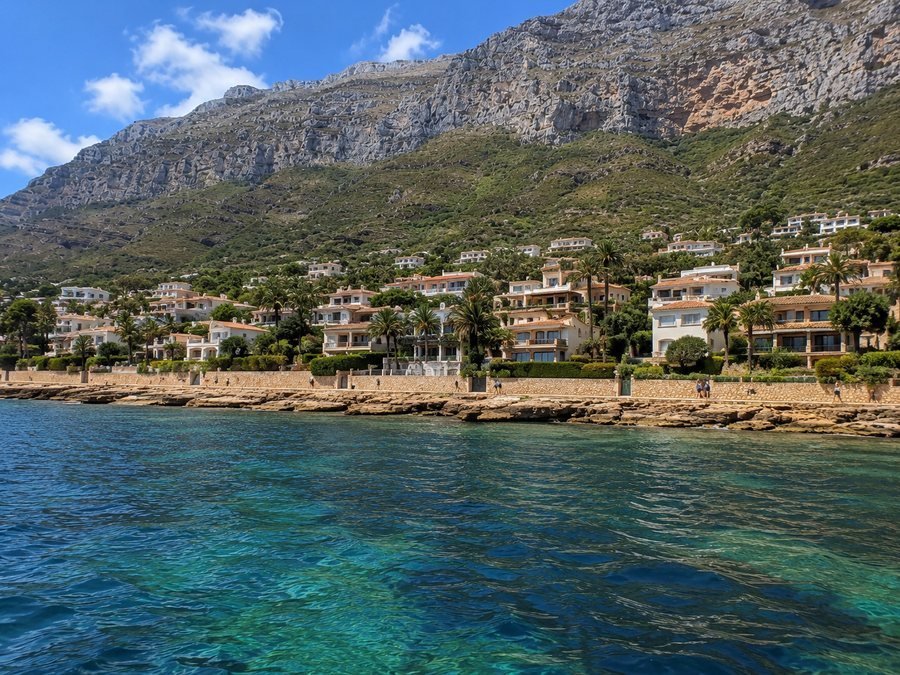
Villas Between the Sea and the Montgó
Les Rotes is also one of Dénia’s most desirable residential areas. Some of the town’s most beautiful houses and villas are found here, either close to the coastal promenade or tucked into the green slopes above it. Their gardens are often filled with palms, bougainvillea, pine trees and Mediterranean plants, creating a sense of privacy despite their proximity to the sea.
The homes closest to the coastline enjoy immediate access to the promenade and rocky bathing areas. Farther uphill, villas look out across the Mediterranean from terraces and balconies, with views stretching towards Dénia, the harbour and the distant coastline. The setting combines two of the area’s defining landscapes: the open sea below and the Montgó behind.
Even when the coast is busy, the residential streets above Les Rotes can feel surprisingly peaceful. Narrow lanes climb between stone walls and gardens, occasionally opening onto wide views of the water. At sunrise, the sea can appear silver or pale blue; later in the day, the light becomes stronger and the coastline takes on deeper shades of turquoise.
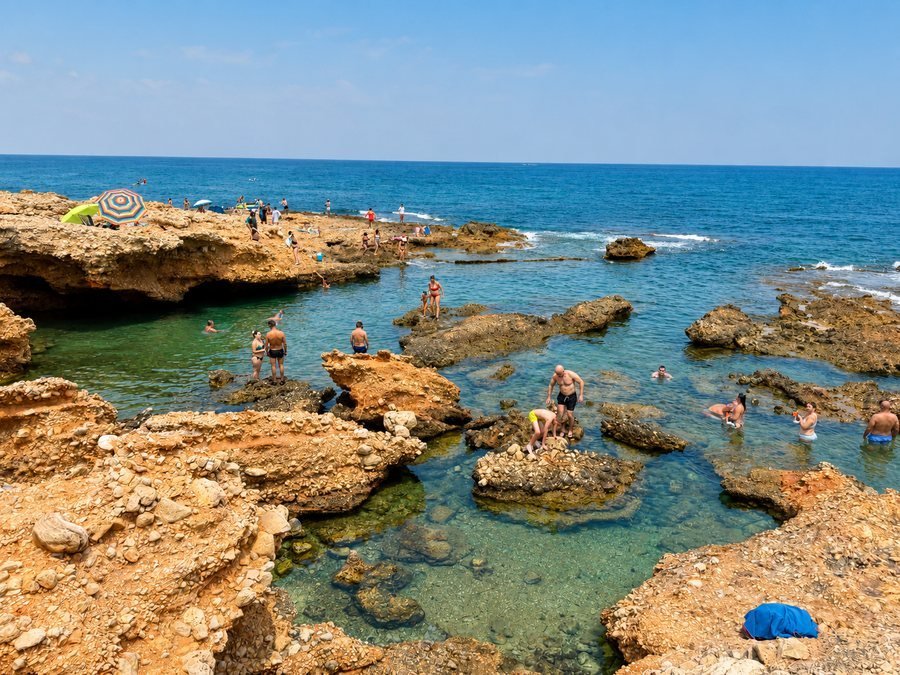
A Coast Made for Exploration
Beyond the popular bathing areas, Les Rotes unfolds as a series of rocky platforms, small inlets and secluded corners. Some places are easy to reach from the promenade, while others require visitors to follow a narrow path or carefully cross the rocks. Each bend in the coast reveals a slightly different view.
Beachcombers explore the shoreline for shells and stones, while snorkelers search for underwater channels and rocky formations. Paddleboarders and kayakers often travel parallel to the coast, using the calmest days to reach places that are difficult to approach from land. From the water, the coastline appears even more dramatic, with villas, pine trees and rugged hills rising behind the narrow strip of shore.
The combination of rock and shallow water also creates natural pools where the sea warms in the sun. These can be particularly appealing to families, although conditions change quickly when the wind rises. Les Rotes is at its most inviting when the Mediterranean is calm; during rough weather, waves can break forcefully across the rocks and make access dangerous.
El Trampolí
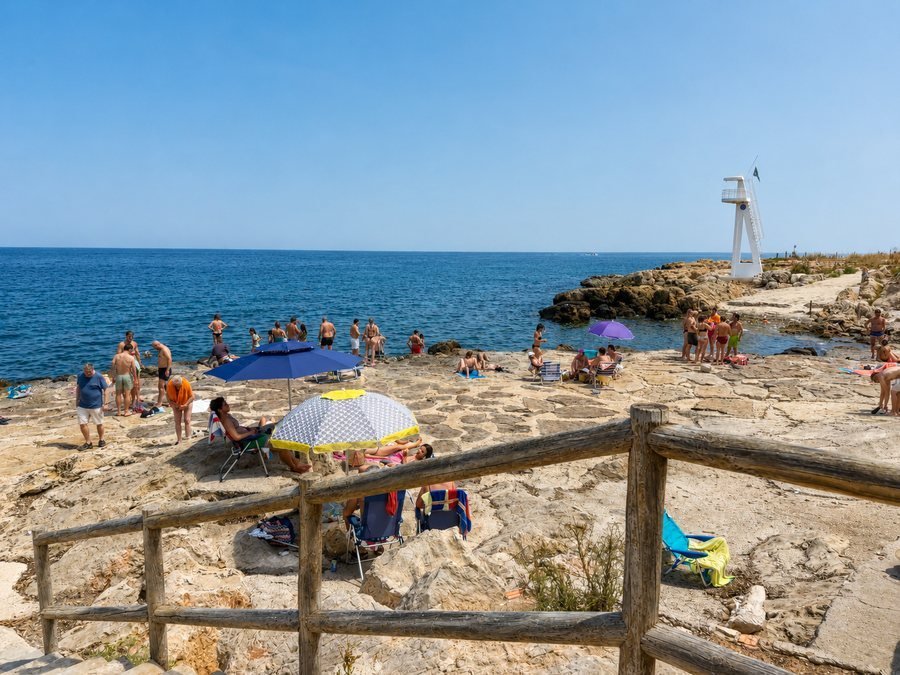
One of the best-known and most sociable bathing areas is El Trampolí. Its name comes from the diving platform that has long been associated with this stretch of coast. On warm summer days, families and groups of friends settle onto the broad, flat rocks with towels, umbrellas, cool boxes and folding chairs. Children take turns jumping into the water, while adults sunbathe, read or sit with their feet in the sea.
El Trampolí captures the informal character of Les Rotes. There are no neat rows of sunbeds and no wide strip of sand separating visitors from the water. Instead, people adapt to the natural shape of the coastline, finding a smooth ledge on which to sit or a safe point from which to enter the sea. Metal ladders and familiar access points make swimming easier in some places, although the rocks can still be slippery.
The area is especially attractive when the sea is calm, as the rocky seabed and clear water create excellent conditions for swimming and snorkeling. It can feel lively during the busiest hours of summer, but early in the morning it has an entirely different character. The water is often still, the rocks retain the coolness of the night, and only a few swimmers may be present.
Punta Negra
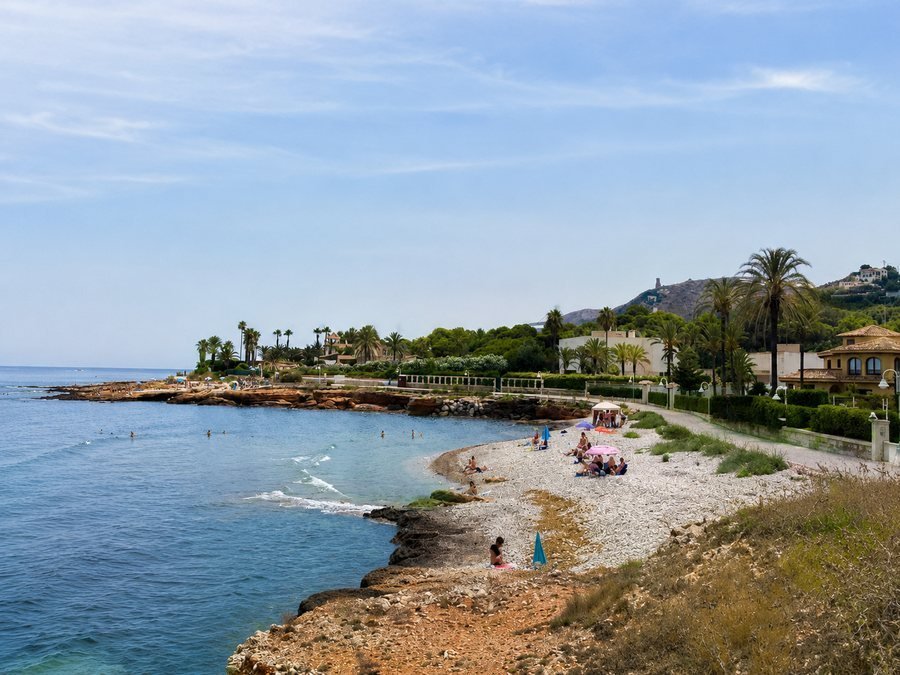
Punta Negra is one of the most striking points along Les Rotes. Here, dark, jagged rocks extend into the turquoise water, creating a dramatic contrast between land and sea. The uneven formations give the area a wilder appearance than some of the flatter bathing platforms closer to Dénia.
On calm days, Punta Negra is a beautiful place for swimming and snorkeling. The rocky seabed creates an interesting underwater environment, and the clarity of the water allows swimmers to see the changing depth beneath them. On days when larger waves arrive, the atmosphere becomes more energetic.
When conditions are suitable, surfers may gather here and enter the water directly from the rocks. Watching them carefully time their entry can be almost as interesting as watching them ride the waves. They stand with their boards at the edge, wait for a break between the sets and then push off into deeper water before paddling away from the shore.
Surfable waves are not guaranteed in Dénia, and many days remain completely calm. However, when the sea does become active, Punta Negra reveals a different personality. The gentle swimming coast becomes more rugged, with waves striking the dark rocks and spray rising into the air.
Les Arenetes
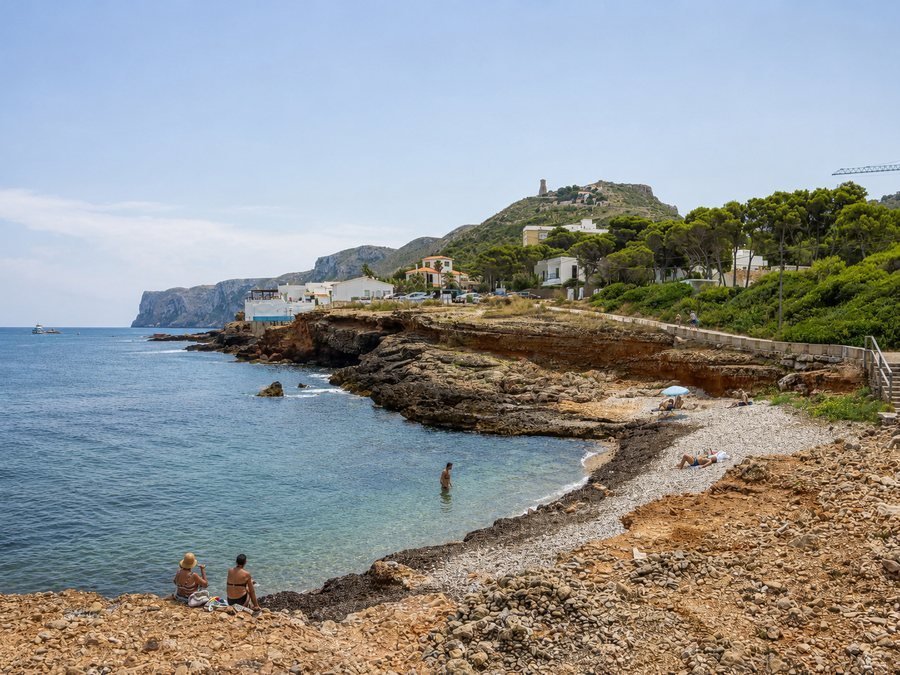
Farther south, Les Arenetes marks another change in the landscape. The coast narrows, the hills rise more sharply behind it and the surroundings begin to feel increasingly remote. The urban character of Dénia has almost disappeared by this point, replaced by cliffs, Mediterranean vegetation and open sea.
Les Arenetes has several rocky bathing places and small coves where visitors can swim when conditions are calm. The setting is more enclosed than at El Trampolí, with the steep landscape behind creating a stronger sense of being at the edge of the natural world.
This is also an area where people often pause simply to look along the coast. From here, the cliffs continue towards the Cabo de San Antonio, forming a powerful natural boundary between Dénia and Xàbia, also known as Jávea.
In the distance, it is possible to identify the general area of the Cova Tallada, the famous sea cave cut into the cliffside farther along the coast. The cave itself is not a casual extension of the promenade, and reaching it requires a separate walk over rough terrain, together with preparation and attention to access conditions. From Les Arenetes, however, its location adds a sense of mystery to the landscape. The cliffs appear almost impenetrable, making it remarkable to imagine the vast chamber hidden within them.
Cala de Aigua Dolç
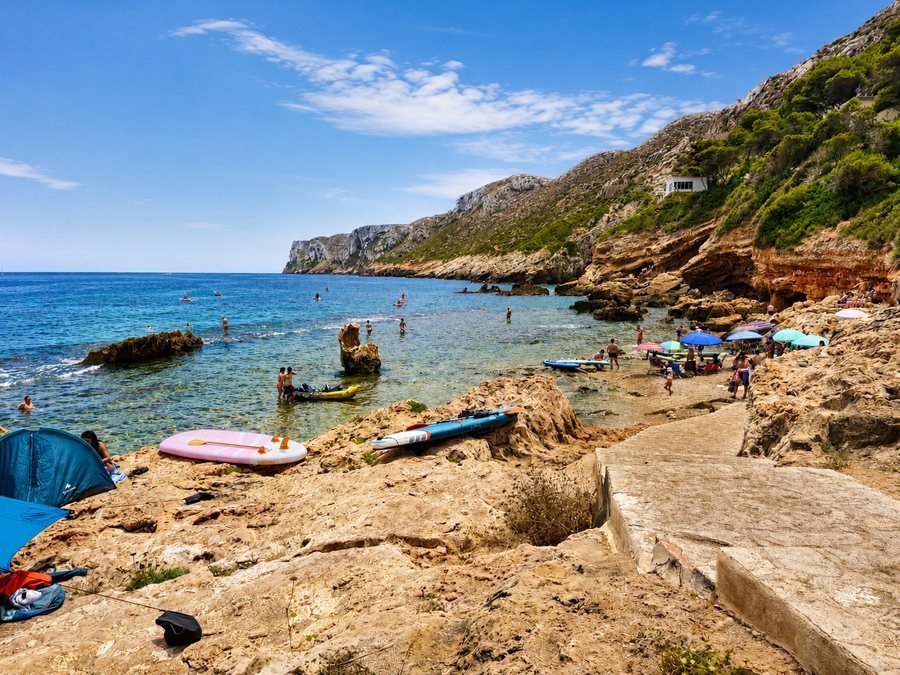
Between the larger rocky platforms are small coves such as Cala de Aigua Dolç. These intimate pockets of sea and stone offer a quieter alternative to the better-known bathing areas. They may consist of little more than a narrow opening between the rocks, but their small scale is part of their appeal.
On a peaceful day, a cove can feel almost private, shared by only a handful of swimmers and sunbathers. Visitors find a place on the rocks, lower themselves carefully into the clear water and spend the afternoon moving between swimming and resting in the sun.
The absence of sand gives the water a particularly clean and transparent appearance. Depending on the position of the sun, the sea may shift from pale green in the shallows to deep blue farther out. The surrounding rocks provide shelter in some conditions, although visitors should still pay close attention to waves and changing weather.
These coves reward patience. They are not designed beaches with obvious entrances and facilities, and the most comfortable places may not be visible from the road. Part of the pleasure lies in walking slowly, looking down towards the sea and choosing a spot that feels inviting.