
The Beaches of Les Marines: Dénia’s Long Sandy Coast
Soft sand, shallow water, protected dunes and broad views across the Gulf of Valencia north of Dénia’s port.
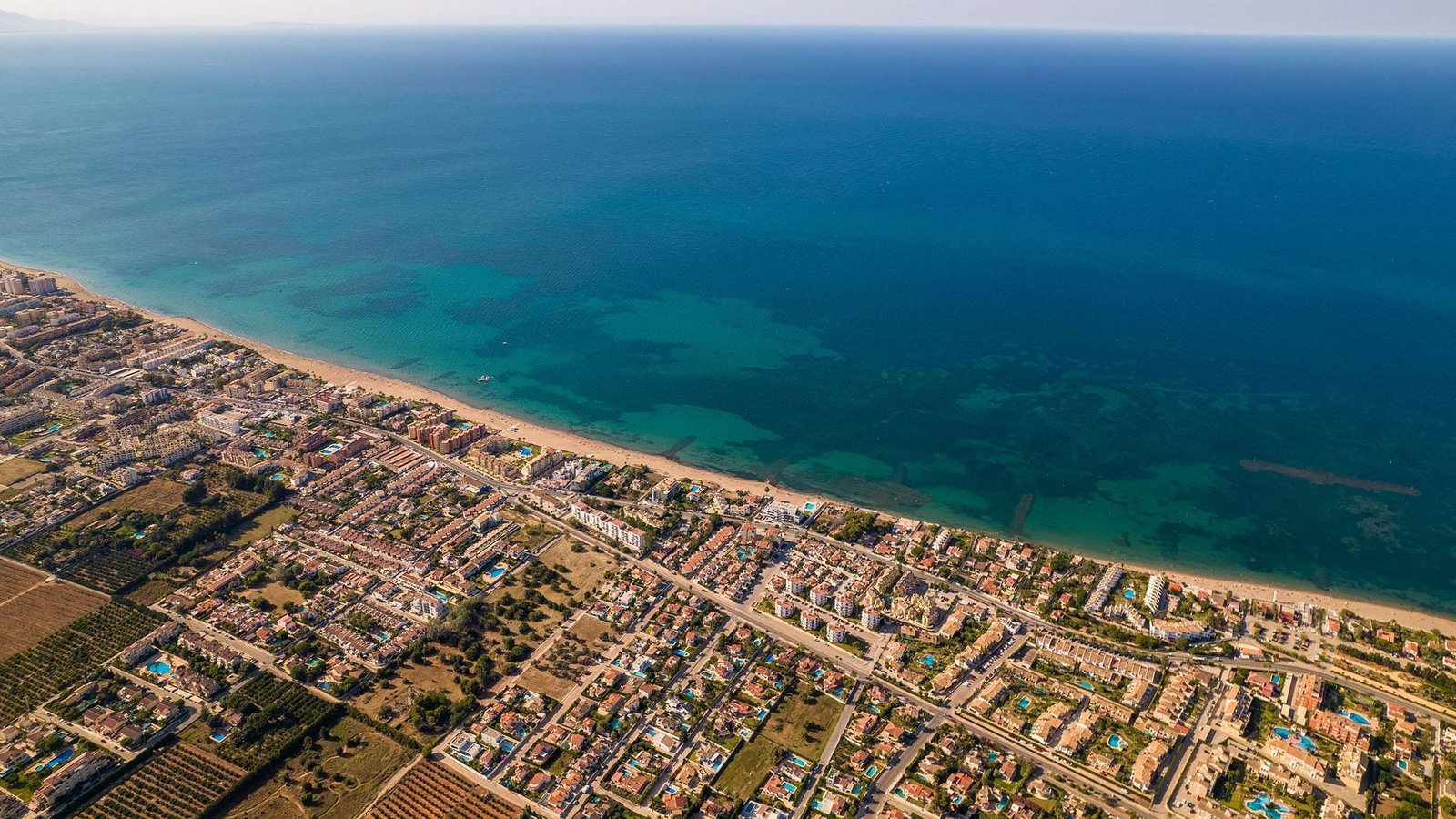
North of Dénia’s port, the coastline opens into a succession of long beaches collectively known as Les Marines. Unlike the rocky coves and stone platforms of Les Rotes to the south, this side of Dénia is defined mainly by soft sand, shallow water and broad views across the Gulf of Valencia.
The name Les Marines can be slightly confusing because it refers both to the wider coastal district and to one particular beach within it. Travelling north from the town, the principal beaches are Punta del Raset, Les Marines, Les Bovetes, Els Molins, L’Almadrava and, at Dénia’s northern boundary, Les Deveses. Punta del Raset forms the first urban beach beside the port, while the beaches that follow become progressively quieter, more residential and more natural.
Although they appear almost continuous from a distance, each beach has its own character. Some are especially convenient for families, restaurants and summer activities; others attract people who value open space, wind sports or long walks with little more than the sea for company.
Les Marines: The Classic Dénia Beach
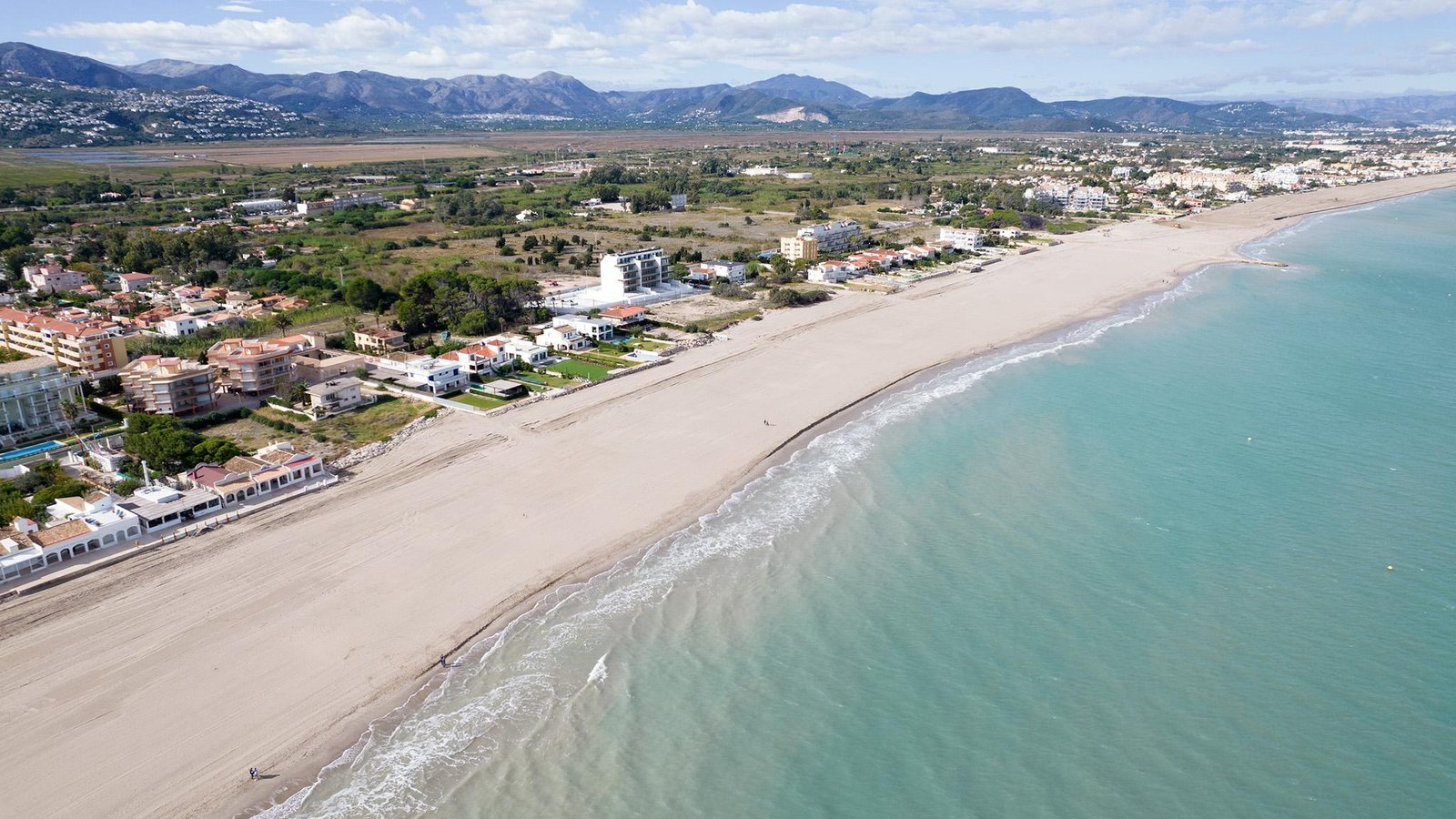
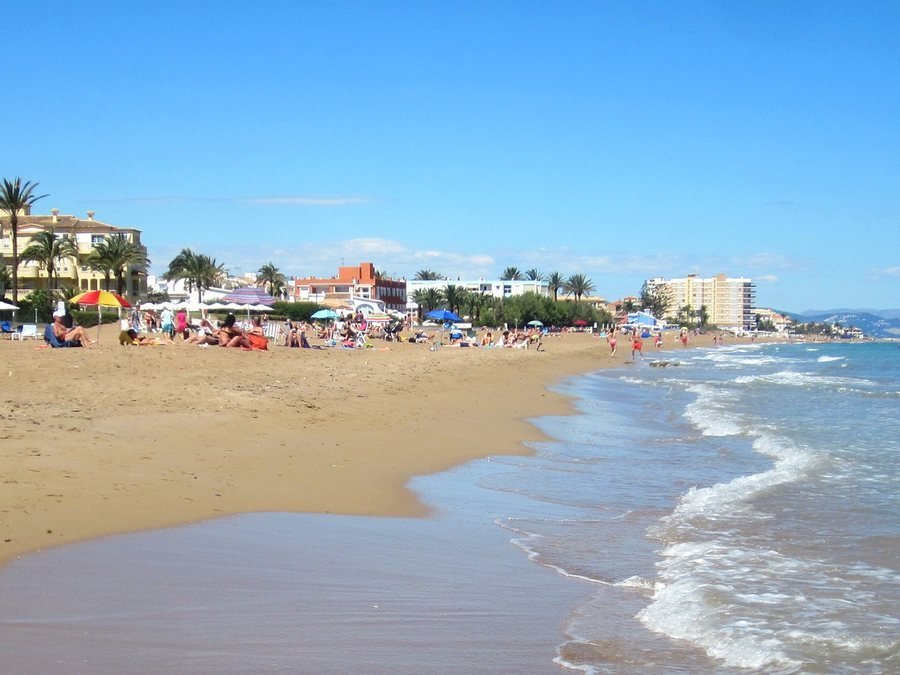
The beach officially known as Les Marines begins close to town, immediately beyond Punta del Raset, and extends for more than three kilometres. Its first section is commonly called Les Albaranes. It is one of the easiest stretches of Dénia’s northern coast to reach from the centre and offers the familiar experience many visitors imagine when they picture a Mediterranean holiday: broad sand, shallow water, umbrellas, families and long walks beside the sea.
The beach is wide enough to accommodate different kinds of visitors without feeling entirely dominated by any one activity. Families tend to settle close to the main access points, while walkers and runners follow the firmer sand near the water. Early in the morning, the shoreline can be remarkably peaceful. Fishermen occasionally stand in the shallows or cast from the beach, while runners, dog walkers outside restricted periods and the first swimmers of the day enjoy the cooler air.
As the morning progresses, the atmosphere becomes livelier. Children play close to the water, groups arrive carrying cool boxes and umbrellas, and swimmers take advantage of a seabed that generally descends gradually. Conditions naturally depend on the wind and weather, but the shallow entrance often makes this a comfortable choice for families.
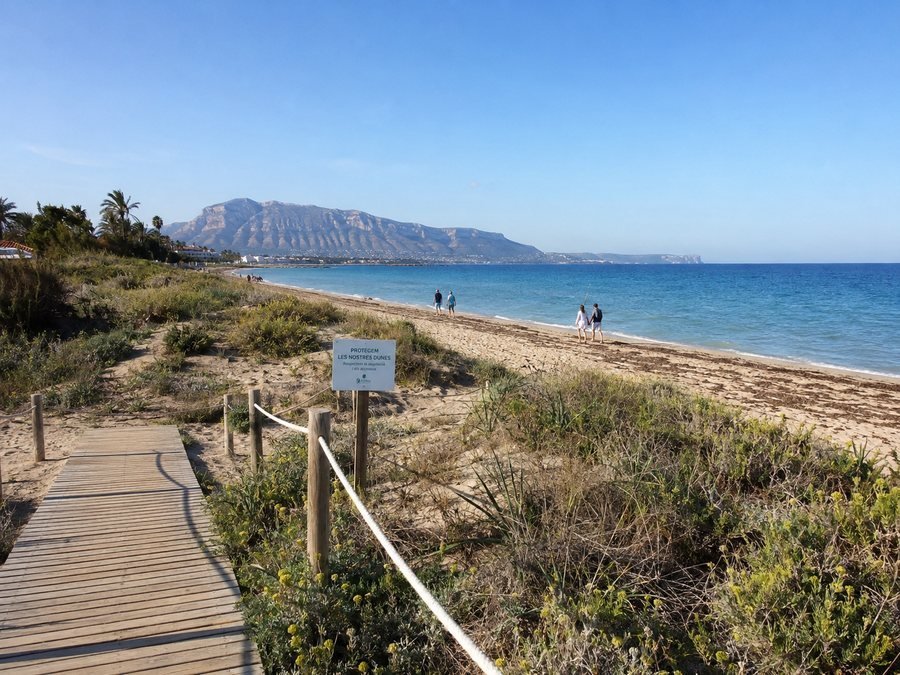
Palm trees, residential buildings and holiday apartments line parts of the area, yet natural dune sections survive between the developed stretches. These dunes are not merely decorative. They hold sand in place, help protect the coast during storms and provide habitat for specialised plants and animals. Some sections are fenced or crossed by designated walkways to prevent damage to the vegetation.
Les Marines works particularly well for visitors who want a spacious sandy beach without travelling far from central Dénia. Restaurants, cafés and residential streets are never too distant, yet a short walk along the shore can still lead to quieter places away from the principal entrances.
Les Bovetes: Spacious, Sociable and Family-Friendly
Farther north, approximately three and a half kilometres from the town centre, Les Bovetes offers another broad expanse of sand. It is comfortable, accessible and well equipped, making it one of the most practical beaches for families and visitors who plan to spend most of the day beside the sea.
Les Bovetes often feels more like a holiday neighbourhood than a remote natural beach. Apartments, villas, restaurants and small commercial areas are located nearby, so it is relatively easy to leave the sand for lunch, buy a drink or collect something forgotten at the accommodation. This convenience contributes to its popularity during July and August.
Despite the activity around its main entrances, the beach’s width provides room to spread out. Families can establish a comfortable base with umbrellas, chairs and toys without being directly on top of the next group. The waterline also leaves ample space for walking, paddling and beach games.
The atmosphere changes considerably according to the time of day. Summer afternoons can be animated, with children in the shallows and groups moving between the beach and nearby restaurants. Earlier in the morning, however, Les Bovetes feels calmer and more open. The sand may show only a few lines of footprints, while the sea is shared by early swimmers and the occasional paddleboarder.
Les Bovetes is a good choice for visitors who want the ease of a serviced beach without remaining as close to the town as Punta del Raset or the first stretches of Les Marines. It combines space and convenience particularly well, which is why many families return to it year after year.
Els Molins: A Quieter Bay with Protected Dunes
At around five kilometres from central Dénia, the coastline curves into the bay-like shape of Els Molins. The greater distance from town and the beach’s more natural surroundings give it a noticeably calmer personality. Official tourism information describes it as a serene sandy beach with specially protected flora, fauna and dunes.
Els Molins is long enough to absorb summer visitors without always feeling crowded. Around the principal access points there are holiday homes, residential buildings and seasonal services, but between them lie stretches where the dominant features are sand, low dunes and open water.
This is a beach for people who enjoy having space around them. A walk along the shoreline can lead away from the busier entrances into areas where conversations fade and the main sounds become the wind, the surf and birds moving around the dunes. Outside the main summer weeks, it can feel almost empty.
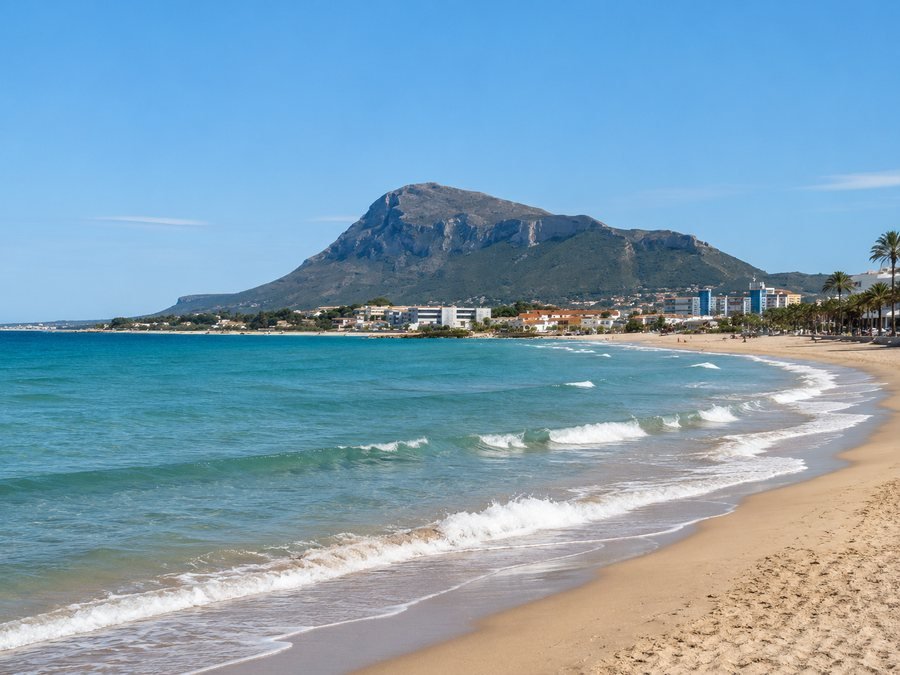
The curved coastline creates attractive views in both directions. Looking south, the distant outline of Dénia and the Montgó helps place the beach within the wider landscape. Looking north, the shore continues towards increasingly quiet and less developed sections of coast.
Els Molins is particularly appealing for long walks, relaxed swimming and unhurried beach days. It offers more separation from the town than Les Bovetes while still being close enough to restaurants, accommodation and everyday services.
Its dune areas require particular care. Visitors should use the marked access paths rather than crossing the vegetation directly. The dunes help stabilise the coastline and provide nesting and refuge areas for wildlife, including the vulnerable Kentish plover. During the nesting period, additional fencing and signs may appear around sensitive zones.
L’Almadrava: Pebbles, Clear Water and a More Rugged Shore
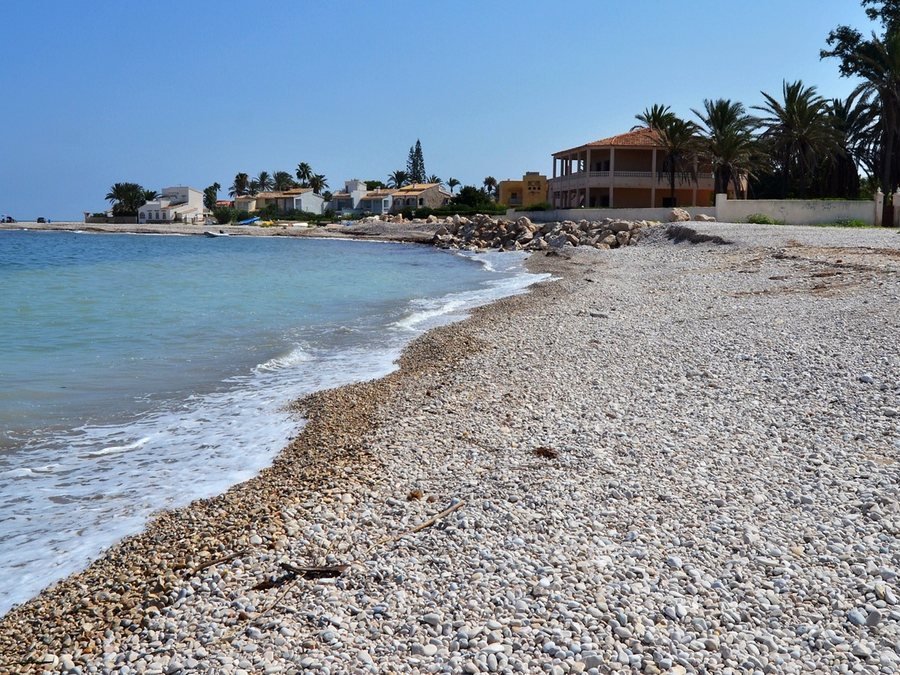
L’Almadrava, beginning approximately seven and a half kilometres from Dénia’s centre, introduces a significant change in the northern coastline. While most Les Marines beaches are predominantly sandy, L’Almadrava consists mainly of smooth pebbles and stones, with more sand appearing as the beach approaches Les Deveses.
This different surface gives L’Almadrava a more rugged and natural appearance. The colours of the stones change as they become wet, while the absence of large quantities of loose sand can make the water appear especially clear on calm days. From the shore, swimmers can often see the seabed beneath them more easily than at some of the sandier beaches.
Entering the water requires greater care because the pebbles can shift underfoot. Water shoes make swimming considerably more comfortable, particularly for children or anyone unaccustomed to stony beaches. Once in the water, however, many visitors appreciate the clarity and the quieter surroundings.
L’Almadrava generally attracts fewer people than Les Bovetes or the beach closest to town. It is well suited to visitors who value peace, clear water and a less conventional beach landscape. Rather than large groups playing games across the sand, the scene often consists of couples reading, local residents swimming and small groups seated close to the water.
Facilities and easy-access features are concentrated mainly around its sandy section; official information notes that footbaths and walkways are not available throughout the entire pebbled shoreline. Visitors choosing the quieter parts should therefore expect a more natural beach experience and arrive with what they need for the day.
The name almadrava recalls the traditional fishing systems once used along Mediterranean coasts, adding another layer to the area’s maritime character. Today, however, its strongest appeal lies in the contrast between the pale stones, clear sea and low coastal development.
Les Deveses: Open Horizons and Wind-Sport Energy
At approximately ten kilometres from central Dénia, Les Deveses forms the final major beach before the municipal boundary and the coast of Oliva. Its distance from town, white sand and more natural surroundings create a sense of openness that distinguishes it from the increasingly developed beaches farther south.
On calm days, Les Deveses can feel wonderfully spacious. The shoreline appears to extend almost without interruption, making it ideal for long walks, quiet swimming and afternoons spent far from the activity of the town centre. The landscape behind the beach includes low residential buildings, open land and distant mountain views, giving the area a less urban atmosphere.
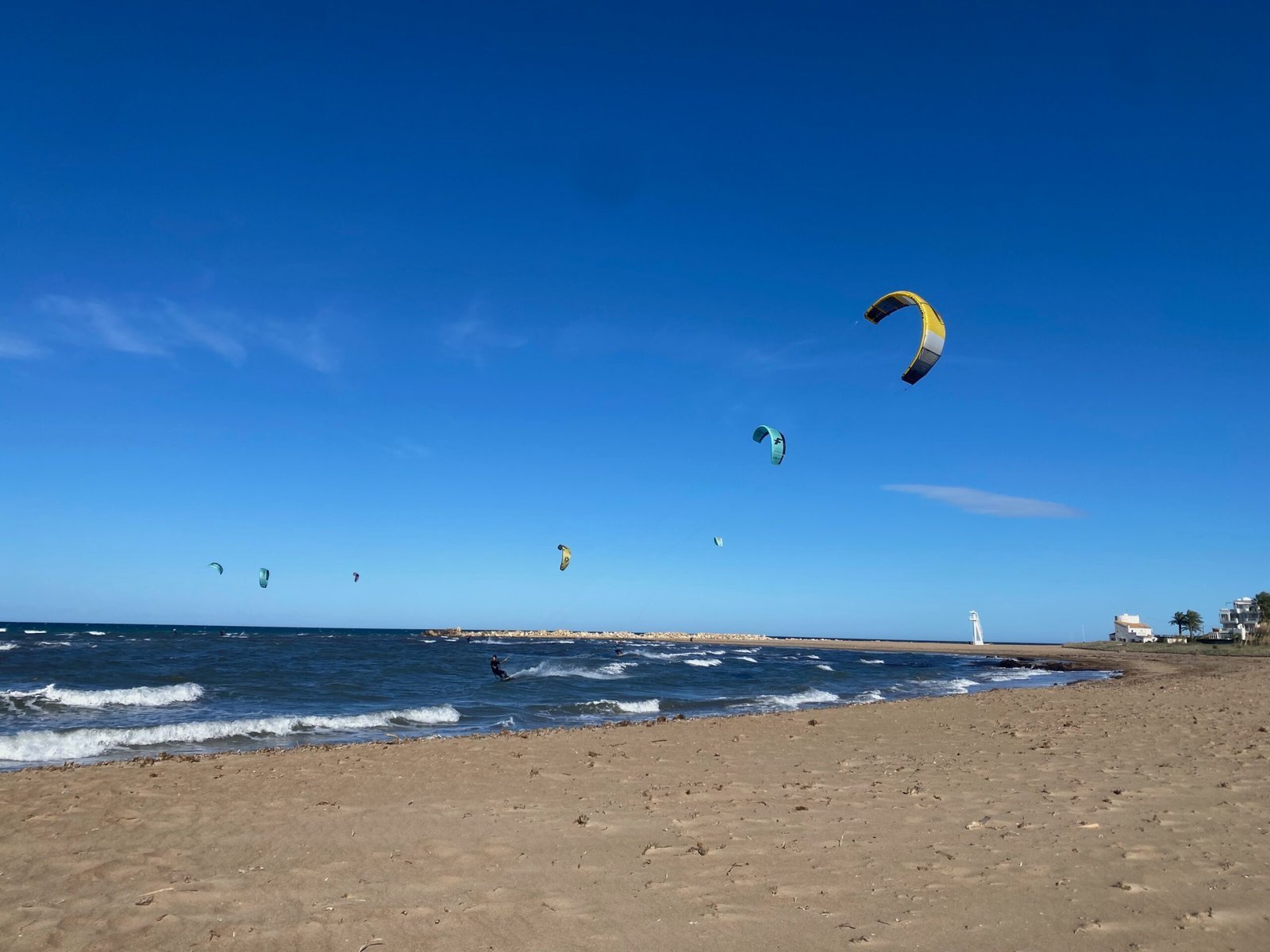
When the wind arrives, however, the beach takes on an entirely different personality. Les Deveses is one of Dénia’s principal locations for windsurfing, kitesurfing and wingfoiling because of its favourable wind conditions. Bright sails and kites move across the water, riders accelerate over the surface and spectators gather to watch from the sand.
For experienced riders, the open water provides room to build speed and practise manoeuvres. Beginners may spend much of their first sessions falling, climbing back onto their boards and trying again. Their combination of concentration, laughter and occasional frustration adds to the lively character of the beach on windy days.
Visitors should be attentive around designated water-sports areas and leave sufficient room for riders to launch and return to shore. A kite or windsurfing sail behaves very differently from an ordinary beach toy and requires considerable space, especially when conditions are strong.
Not every part of Les Deveses is active or sporty. Move away from the recognised launch areas and the beach quickly returns to a peaceful rhythm. This contrast is part of its attraction: one section may be filled with colour and movement while another, only a short distance away, feels quiet and almost untouched.
Protecting the Northern Coast
The beaches of Les Marines are not simply recreational spaces. Their dunes, coastal plants, seagrass meadows and nesting zones form an interconnected environment that helps protect Dénia’s shoreline.
Dunes capture and store sand, reducing erosion and increasing the coast’s resistance to storms. They also shelter plants and animals that cannot survive on heavily disturbed urban beaches. Visitors should always use the established paths and wooden walkways, avoid placing towels or bicycles inside fenced dune areas and keep away from marked nesting sites. Shells should also remain on the beach, where they contribute to the natural formation of sand and provide shelter for small organisms.
After storms, brown leaves or fibrous balls of Posidonia oceanica may accumulate along parts of the shoreline. These remains are sometimes mistaken for dirt, but they are evidence of a living marine ecosystem. Posidonia meadows provide habitat for marine species, improve water quality and help slow coastal erosion. Material left on the shore also absorbs wave energy and protects the sand during rough weather.
The amount removed by beach-cleaning services depends upon the ecological classification of each section. Some urban stretches may be cleared during the tourist season, while more protected areas of Les Marines, Els Molins and Les Deveses retain the natural material along the shore.
Visitors can help by carrying away all rubbish, avoiding single-use plastics, respecting signs and barriers, using environmentally considerate sun products and leaving shells, plants and marine remains where they belong. Small acts of care matter greatly on a coastline visited by thousands of people.
Together, Les Marines, Les Bovetes, Els Molins, L’Almadrava and Les Deveses reveal the changing personality of Dénia’s northern shore. The journey begins with accessible, sociable beaches close to town, passes through peaceful dunes and residential bays, and ends amid open sand, wind and distant mountain views. Each beach offers something different, but all share the spaciousness and light that define this side of Dénia.