
Montgó Natural Park
The limestone mountain behind Dénia: a protected natural park of cliffs, caves, old terraces, rare plants, sea views and demanding walking routes.
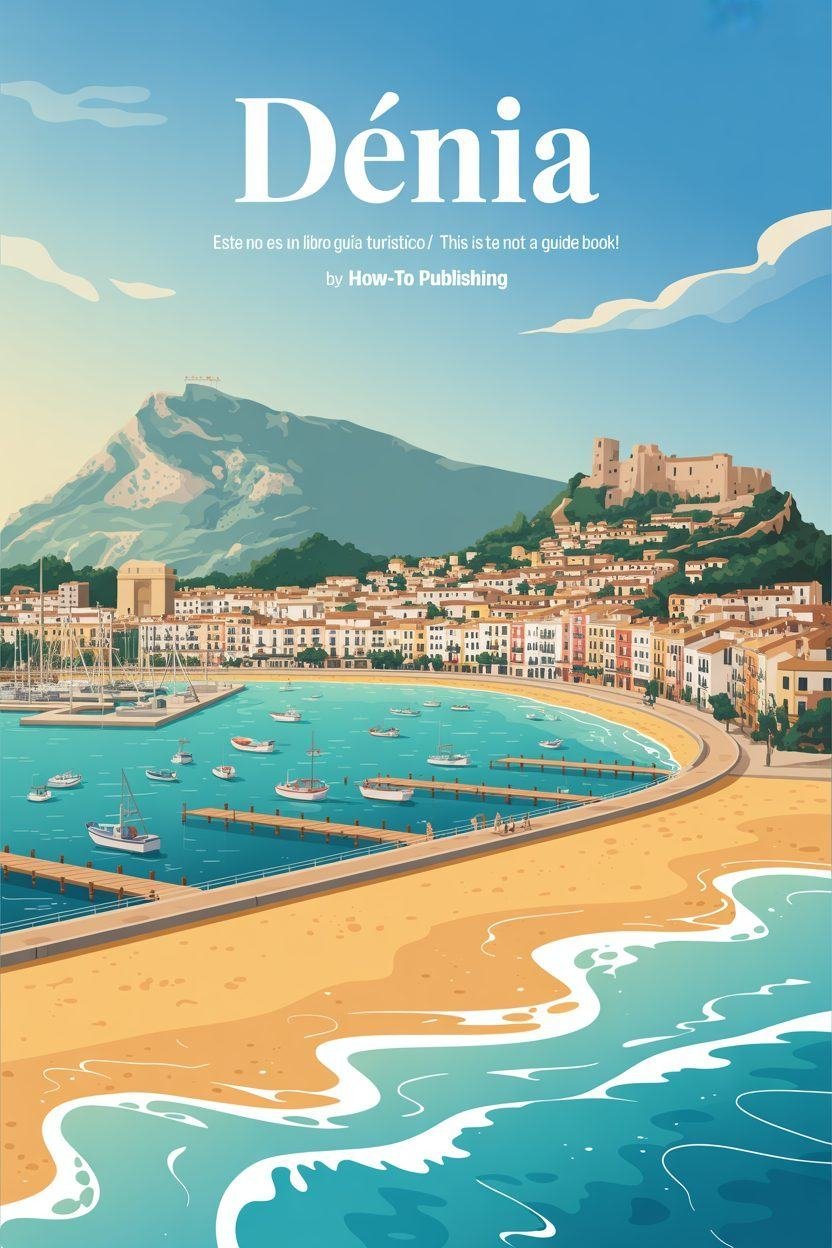
The Montgó is more than a backdrop to Dénia. Its pale limestone ridge rises immediately behind the town, appearing at the end of streets, above rooftops and beyond the masts in the harbour. From the beaches, it seems to emerge almost directly from the Mediterranean; from its upper slopes, Dénia looks like a narrow meeting place between mountain, castle, port and sea.
Declared a natural park in 1987, the protected area extends between Dénia and Xàbia and reaches 753 metres at its highest point. Although this may sound modest compared with Spain’s great mountain ranges, the Montgó rises so abruptly from the coast that it feels far taller. Its isolated position also makes it a natural viewpoint over the Marina Alta, the Gulf of Valencia and the Mediterranean.
A Mountain of Contrasts
The Montgó changes character according to the side from which it is approached. Its northern face, overlooking Dénia, includes shaded gullies, pine-covered sections and old agricultural terraces. The southern side above Xàbia is generally more exposed to the sun, while the eastern end narrows into the plateau and cliffs of Cabo de San Antonio. Differences in altitude, orientation, soil and exposure to wind and sea air create a surprising variety of habitats within a relatively compact area.
More than 650 plant species have been recorded in the park. Rosemary, thyme, rockrose, mastic, dwarf fan palm and kermes oak are among the plants that shape its Mediterranean landscape, while more unusual species survive in crevices, ravines and protected botanical areas. Two officially designated flora micro-reserves lie around the Cova de l’Aigua and the Barranc de l’Emboixar, reflecting the ecological importance of the mountain’s less disturbed corners.
Spring is the most colourful season. Low shrubs flower across the former terraces, and the scents of rosemary, lavender and thyme intensify in the sun. The mountain is not covered by continuous forest; much of its beauty comes from the contrast between pale limestone, low scrub, scattered pines and sudden pockets of vegetation growing in places that initially appear almost bare.
Wildlife is often easier to hear or glimpse than to observe closely. Kestrels and peregrine falcons use the rocky cliffs, while smaller birds shelter in pine woods and dense scrub. Rabbits, foxes and genets also inhabit the park, although most mammals remain concealed during the busiest hours of the day. Early mornings and quieter trails offer the best chance of noticing movement among the vegetation.
Walking the Montgó
There is no single Montgó walk. Routes range from relatively level tracks across former agricultural land to demanding summit circuits involving steep climbs, sharp limestone and exposed ridges. The landscape may look compact from Dénia, but distances, heat and uneven ground make many routes more strenuous than expected.
Camí de la Colònia and the Cova del Camell
The Camí de la Colònia is one of the best introductions to the northern face of the mountain. It begins near the Ermita del Pare Pere and follows part of the old route associated with the Montgó Agricultural Colony. The track initially climbs before settling into a more horizontal course along the slope.
Remains of cultivated terraces can still be seen beside the path. These slopes once supported vines, fig trees, almonds and carobs before Mediterranean scrub gradually reclaimed the abandoned farmland. The walk therefore reveals both the natural landscape and the marks left by generations who attempted to cultivate the mountain.
The route towards the Cova del Camell, sometimes written as Cova del Gamell, is less extreme than the full summit ascent but should not be mistaken for an urban promenade. The surface becomes increasingly rocky, and the complete out-and-back journey is lengthy. Its rewards are the open views across Dénia, the castle, the northern beaches and the mountains beyond the coastal plain. On exceptionally clear days, the outlines of Ibiza—and sometimes even Mallorca—may be visible on the horizon.
This route is particularly attractive in spring, when flowers spread through the old terraces, and in the late afternoon, when the lowering sun illuminates the coast. Walkers should still allow enough time to return before dark; the broken limestone and narrow sections are considerably more difficult when visibility fades.
Cova de l’Aigua and Racó del Bou
The walk to the Cova de l’Aigua, or Water Cave, is one of the Montgó’s most rewarding shorter routes, although the climb is steeper and more demanding than its distance might suggest. Beginning near the Ermita del Pare Pere, the circular route covers approximately 5.4 kilometres, climbs around 350 metres and is officially classified as moderate. It passes through a shaded section before rising over limestone steps and exposed Mediterranean scrub.
The cave entrance opens high above Dénia, framing views of the town and sea below. Beside it is a Roman inscription dated to AD 238, while archaeological evidence indicates use during several other periods, including the Iberian era, Late Antiquity and Islamic times. Compartments were constructed inside to retain water, demonstrating how communities adapted one of the mountain’s natural cavities to the realities of living in a dry landscape. Only the first part of the cave is accessible, and a torch is needed; after substantial rain, water can fill sections of the interior.
The route can be combined with the Racó del Bou, a broad concavity in the mountain named after its resemblance to the shape of a bull’s horn. From this area, the trail reconnects with the Camí de la Colònia. The combination of cave, woodland, old terraces and coastal views makes this one of the best routes for understanding the Montgó without attempting its summit.
The Creueta de Dénia
The cross visible high on the mountain from Dénia is not located at the main 753-metre summit. It stands at the Creueta de Dénia, a separate viewpoint at approximately 694 metres. Reaching it requires a demanding climb from the Camí de la Colònia across steep paths and an upper plateau of sharply eroded limestone.
The current cross was placed in 1999, although records of a cross on the Montgó date to 1684. From the Creueta, hikers look almost directly down over Dénia, its castle and harbour. The viewpoint is impressive, but the route is officially considered difficult and is unsuitable for walkers without mountain experience.
The Full Summit Route
Reaching the true summit is a significantly more serious undertaking. The circular route from the Ermita del Pare Pere via the Camí de la Colònia covers approximately 14 kilometres, involves more than 640 metres of accumulated ascent and is estimated to take around six and a half hours. The route crosses rocky mountain paths and exposed limestone before reaching the geodesic marker at 753 metres.
The final landscape is stark and open. Vegetation becomes lower, the rock increasingly dominates, and the separation between sky and sea seems to disappear. Dénia lies below on one side, while Xàbia and the valleys of the Marina Alta open on the other. Mountain ranges overlap inland, and the coastline curves away in both directions.
The eastern descent is steep and requires particular care. Some sections involve moving between rocks with the assistance of the hands before the trail begins its long zigzag towards the Cova del Camell and the Camí de la Colònia. This is not a route to begin casually or late in the day. It should be attempted only with suitable footwear, adequate water, reliable navigation and enough daylight for delays.
History Written into the Mountain
Human beings have used the Montgó for thousands of years—as shelter, burial ground, defensive position, agricultural land, religious retreat and lookout over the sea.
Cova del Barranc del Migdia
The Cova del Barranc del Migdia, on the Xàbia side of the mountain, preserves one of its most important prehistoric records. The cave was used for collective burials during the Copper Age, more than 4,500 years ago, and contains prehistoric paintings in red and black. Archaeologists have identified human remains, stone tools, arrowheads and burial objects, providing insight into the beliefs and social organisation of the communities that lived around the Montgó.
This is not a public visitor cave. It is positioned in a cliff and can only be reached through technical climbing, a difficulty that helped preserve its archaeological deposits. Its importance is best appreciated through museum displays, publications and interpretation rather than by attempting to approach it.
L’Alt de Benimaquía
On the northwestern side of the Montgó, above La Xara, L’Alt de Benimaquía preserves the remains of a fortified Iberian settlement. Its defensive wall enclosed a triangular area and was reinforced by several towers. Excavations uncovered evidence of wine production and amphorae influenced by Phoenician forms, making the site one of the earliest documented wine-production centres on the Iberian Peninsula.
The site connects the mountain to one of Dénia’s defining traditions. Wine was not merely produced for local use; it formed part of the region’s early commercial relationships across the Mediterranean. The surviving walls may appear modest today, but their position above the surrounding plain reveals why the location was chosen: it offered protection, visibility and control over approaches through the valleys below.
The Ermita del Pare Pere
At the beginning of several northern routes stands the Ermita del Pare Pere, beside the simple stone shelter associated with Fray Pedro Esteve. The 17th-century Franciscan is remembered locally as Pare Pere and is closely connected with Dénia’s religious history.
The hermitage creates a quiet threshold between the residential streets below and the mountain paths above. For hikers it is a practical starting point; for others it is a destination in itself, offering a calmer and more accessible encounter with the lower Montgó. The small stone refuge beside it recalls the tradition that Pare Pere withdrew here for prayer and contemplation.
Cabo de San Antonio and Torre del Gerro
At its eastern end, the Montgó does not simply descend into the coastal plain. It continues through Les Planes and ends dramatically at Cabo de San Antonio, where limestone cliffs fall towards the Mediterranean between Dénia and Xàbia.
The area around the lighthouse offers broad views over the sea, the Xàbia coastline and the Montgó itself. On clear days, Ibiza may appear as a faint mountainous silhouette rather than a clearly defined island. The view changes constantly with haze, cloud and the angle of the sun, so visibility should be regarded as a fortunate possibility rather than a certainty.
A demanding linear route connects the end of Les Rotes with the cape. It climbs first to the Torre del Gerro, continues across Les Planes and passes the remains of historic windmills before reaching the lighthouse area. The complete official route is approximately 13.8 kilometres one way, so many visitors choose only a shorter section rather than attempting the full crossing.
The Torre del Gerro is a 16th-century coastal watchtower built as part of a defensive system against raids by Barbary corsairs. Its elevated entrance, thick stone walls and wide view of the coastline reflect its original purpose. Guards could communicate warnings between coastal towers using visual signals, allowing settlements to prepare when suspicious ships appeared offshore.
Cova Tallada: Where Mountain and Sea Meet
The Cova Tallada lies at the base of the cliffs between Dénia and Xàbia. Its vast chambers are partly natural and partly shaped by centuries of quarrying for tosca, the porous local stone once widely used in regional architecture. Stone associated with the quarry was used in historic buildings, including parts of Dénia Castle.
Inside, the straight cuts, pillars and high openings created by stone extraction combine with pools of seawater and natural rock formations. Light entering from the coast reflects across the water, giving the cave an atmosphere unlike anywhere else around Dénia.
Despite its popularity, the Cova Tallada should not be treated as an ordinary beach excursion. The land approach crosses irregular ground close to cliffs and includes sections that can be uncomfortable for anyone with vertigo. It is not recommended for people with limited mobility, inexperienced mountain walkers or small children. There is no mobile coverage or lifeguard service, and rough seas can make entry to and departure from the cave impossible.
Access is regulated during periods of high and medium-high demand, including parts of summer and other holiday periods. Reservations may be required whether arriving on foot or from the sea, and the applicable dates can change. Visitors should therefore consult the natural park’s current rules before setting out rather than relying on information from a previous season.
Preparing for the Montgó
The Montgó’s closeness to Dénia can create a false sense of ease. The upper routes are genuine mountain walks, with loose stone, sharp limestone, steep slopes and long exposed sections. Shade is limited on many trails, and summer temperatures can make even a moderate route exhausting.
Spring and autumn generally provide the most comfortable hiking conditions. Winter can also be excellent on clear days, although wind and rapidly changing cloud may affect the ridge. During summer, only short routes should be considered, preferably very early in the morning, and access may be restricted during periods of extreme heat or fire danger.
Carry more water than you expect to need, wear proper walking shoes and protect yourself from the sun. Download the official route or an offline map before leaving, as mobile reception can weaken or disappear. For longer routes, tell someone where you are going and when you expect to return.
Stay on marked paths, particularly around flora micro-reserves and erosion-sensitive slopes. Do not remove plants, stones or archaeological material, and carry all rubbish back with you. Dogs should be kept under close control so they do not disturb wildlife or leave the path.
The Montgó rewards this care generously. It offers Dénia something few coastal towns possess so close to their centre: a wild limestone mountain where Mediterranean plants grow among ancient terraces, archaeological remains appear beside hiking paths, and the sea remains visible from almost every height. Whether you walk only as far as the Ermita del Pare Pere, climb to the Cova de l’Aigua or commit to the full summit, the mountain provides an entirely different perspective on Dénia—and on the close relationship between the city, its history and the surrounding landscape.